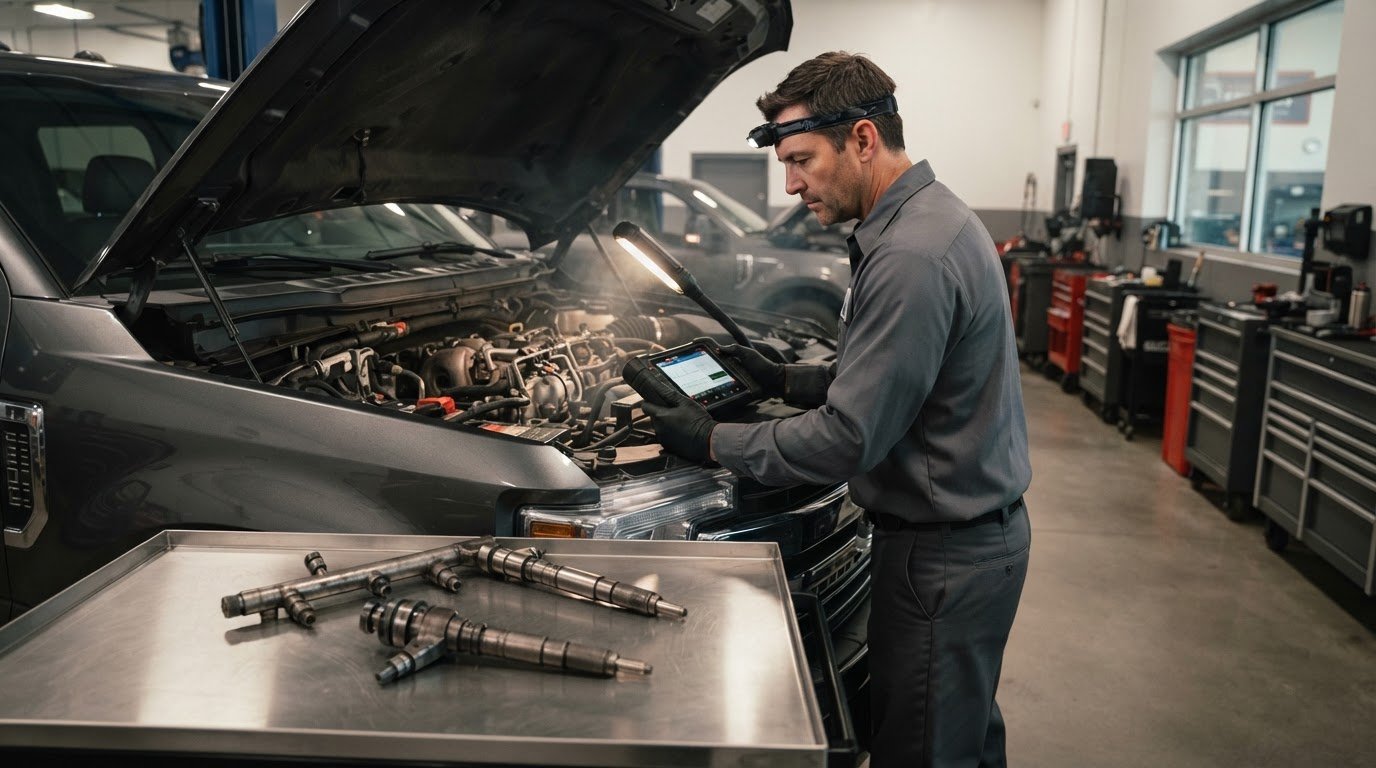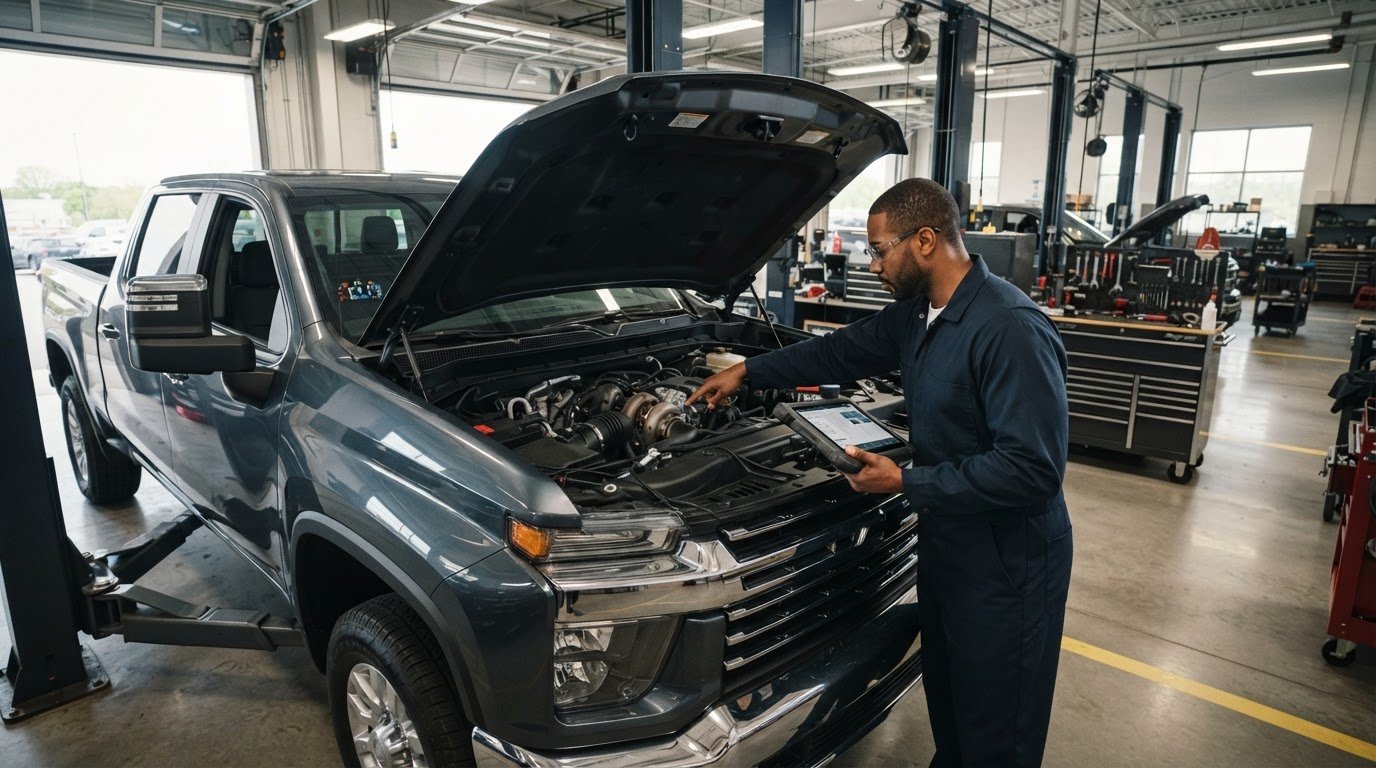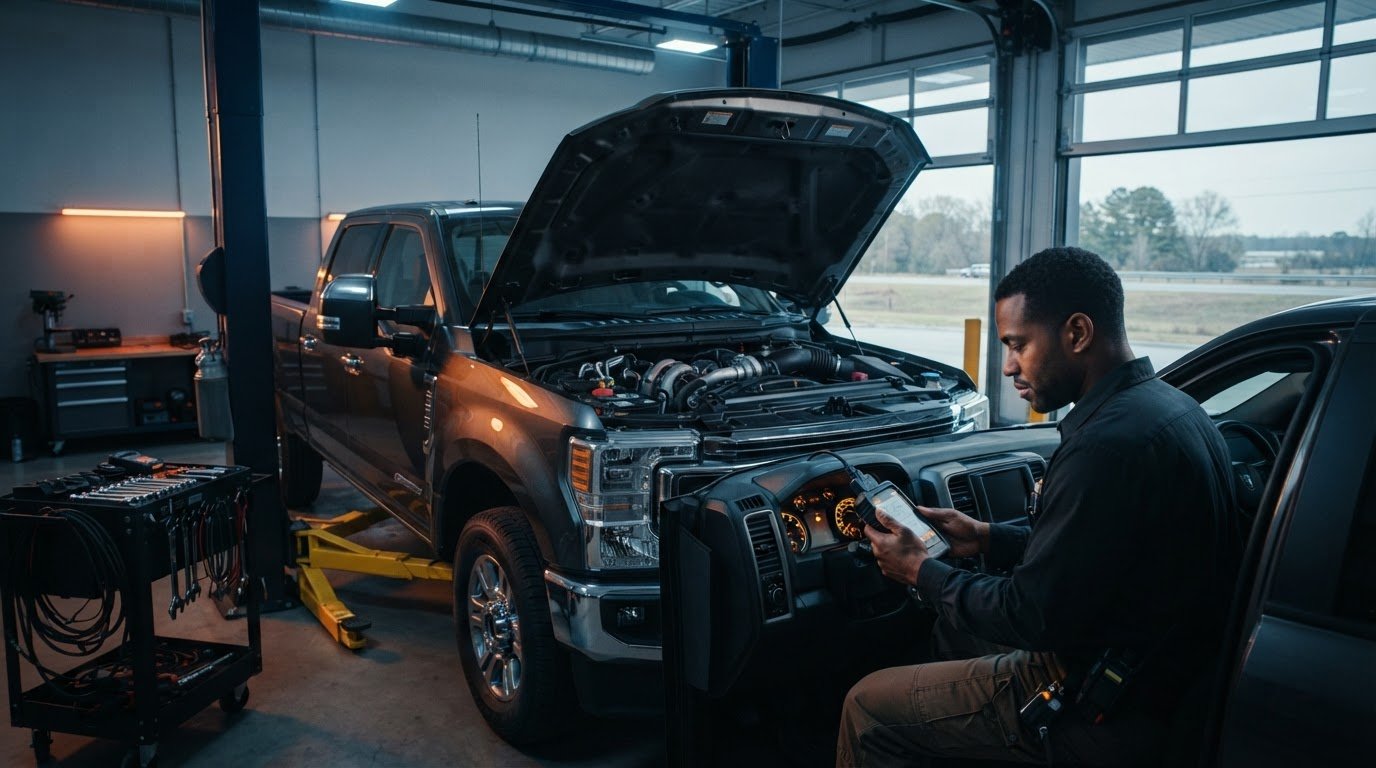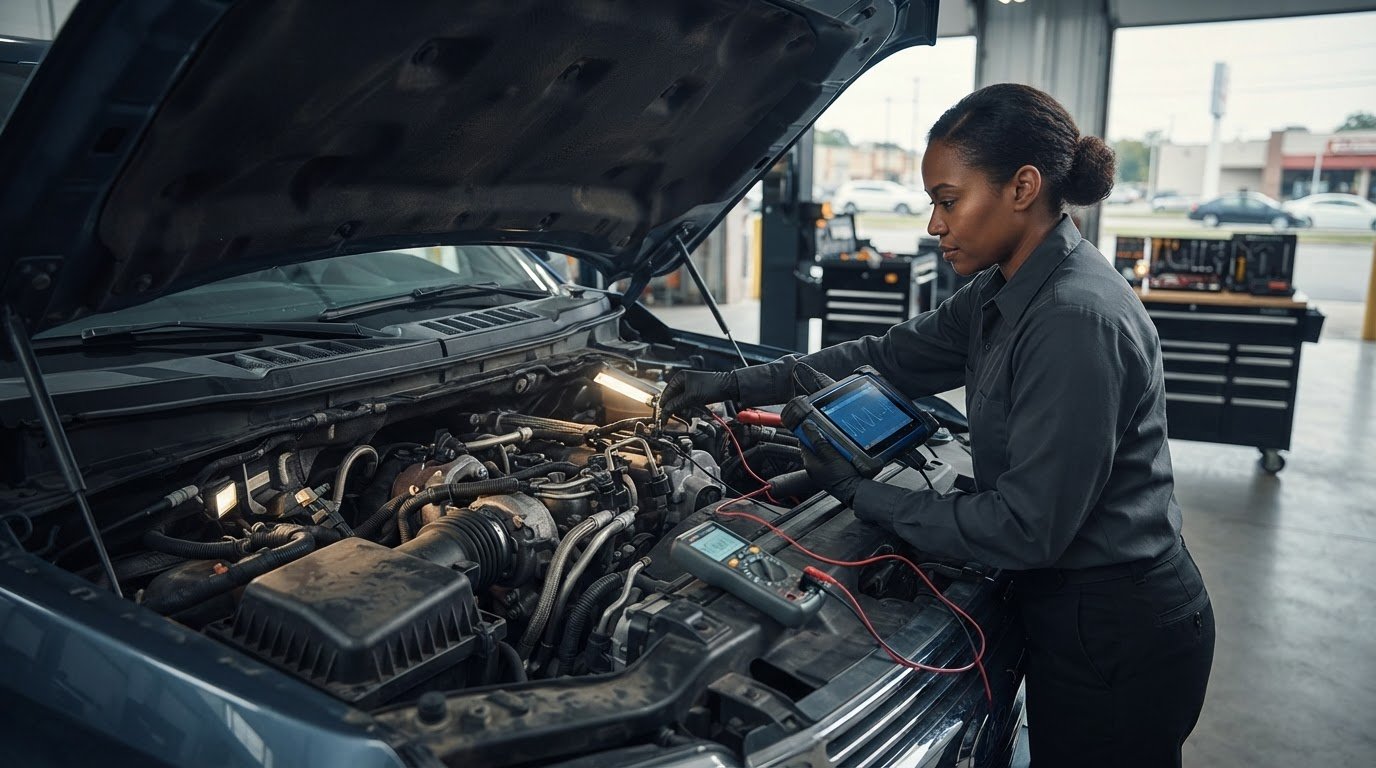
What if a trouble code points to a system, but not the reason your vehicle hesitates? A warning light can offer a useful clue, yet symptoms that come and go may need more than a basic scan to explain. If you’re searching for a driveability diagnostic near me, look for a process that follows the symptom, not just the code. A technician can review vehicle data, test related systems, and inspect components to narrow down what’s affecting performance.
At On Top Diesel & Automotive, ASE-certified technicians diagnose passenger vehicles and trucks, including engine, electrical, fuel, and transmission concerns. This article explains what a professional driveability diagnostic may check, what details to share when hesitation or poor running is hard to describe, and what to expect from the process. You’ll also learn how diagnosis guides the next repair step, so you can make a more informed decision about your vehicle’s care.
Key Takeaways
- A driveability diagnostic investigates why a vehicle hesitates or runs poorly instead of assuming a symptom points to one failed part.
- A trouble code offers a clue. Further inspection and testing help technicians understand what’s behind it.
- Record when symptoms happen, how often they occur, and any changes in sound, smell, vibration, or starting to give the technician useful details.
- When searching for a driveability diagnostic near me, look for a shop that explains its findings and practical next steps clearly.
- On Top Diesel & Automotive’s ASE-certified technicians handle diagnostics for passenger vehicles and trucks.
Driveability Diagnostic Near Me: When Hesitation Needs Professional Attention
A driveability diagnostic is a focused process for finding out why a vehicle runs or responds abnormally. It looks beyond the moment a problem appears and considers the conditions around it, along with what the vehicle’s systems reveal. If you’re searching for a driveability diagnostic near me , professional testing can help sort through symptoms that are concerning but don’t clearly point to one cause.
Hesitation may feel like a pause when you press the accelerator. Stumbling can feel like the engine briefly falters, while rough idle means the vehicle shakes or runs unevenly when stopped. Surging, stalling, or delayed acceleration can also signal a driveability concern. A symptom describes what the vehicle is doing; testing helps identify the mechanical or electrical cause behind it. On-board diagnostics (OBD) can provide useful information about detected issues, but it’s one part of understanding how a vehicle is running.
Which driving symptoms should prompt a diagnostic?
Pay attention to when the concern occurs instead of trying to name the faulty part. Note whether it happens when you start the vehicle, while idling at a stop, as you accelerate, or at a steady cruising speed. Record whether it’s occasional, repeats under similar conditions, or is becoming more frequent.
- Starting or idling: Slow or uneven starting, a rough idle, or stalling soon after startup.
- Accelerating: Hesitation, stumbling, or a delay between pressing the pedal and the vehicle responding.
- Cruising: Surging, a change in engine smoothness, or a problem that appears at a particular speed.
A warning light, unusual sound, or visible smoke adds useful context. Note when you noticed it and whether it appeared with the hesitation. These details help a technician understand the pattern without relying on symptoms alone to identify the cause.
Why intermittent hesitation is easy to misread
A problem that appears only sometimes can be hard to reproduce during a short drive. The vehicle may behave differently depending on engine temperature, speed, load, or whether the route involves stop-and-go traffic. For example, you might notice a stumble while pulling away after a stop, but not during steady cruising. A drive that feels normal doesn’t rule out a recurring concern.
Write down the conditions when the symptom occurs, including whether the engine is cold or warmed up, how quickly you were accelerating, and what kind of driving you were doing. You don’t need to interpret the pattern yourself. Clear observations give the technician a useful starting point for investigating and testing relevant systems. If the hesitation becomes more frequent or comes with other changes, add those details to your notes.
How a Driveability Diagnostic Tracks the Symptom to Its Source
A useful diagnosis follows the evidence step by step. The technician starts with what you’ve noticed, checks the areas most relevant to the concern, performs appropriate tests, and explains what the results support. If you’re looking for a driveability diagnostic near me , expect the investigation to be guided by your vehicle’s symptoms, not guesswork or a single clue.
- Discuss the concern. The technician asks when the symptom began, how often it happens, and what driving conditions bring it on.
- Review relevant history. Maintenance records and recent repairs provide context and help shape the investigation, but they don’t prove a part has failed.
- Inspect and test. Initial observations help determine which systems and components to check more closely.
- Compare the evidence. Test results are considered alongside the reported symptoms, rather than treated as an automatic verdict.
- Explain the findings. The technician describes what the checks showed and the practical next steps supported by the evidence.
Starting with the driver’s description and vehicle history
Specific details make a hard-to-catch problem easier to investigate. Share whether it began suddenly or gradually, whether it happens every trip or only under certain conditions, and whether you’ve noticed a change since maintenance or a repair. A technician may ask focused follow-up questions before choosing tests. That conversation helps narrow the search without assuming that a recent repair caused the concern.
Testing systems that can affect engine performance
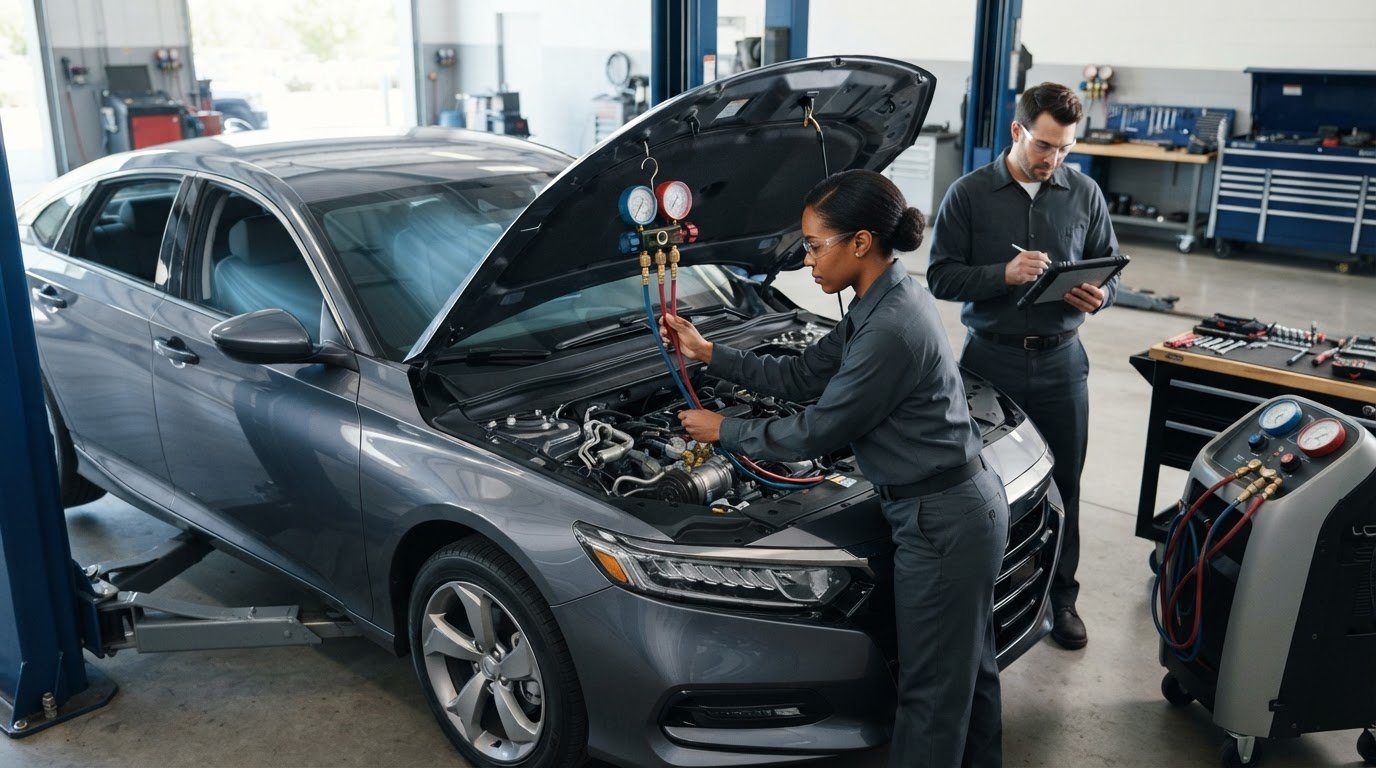
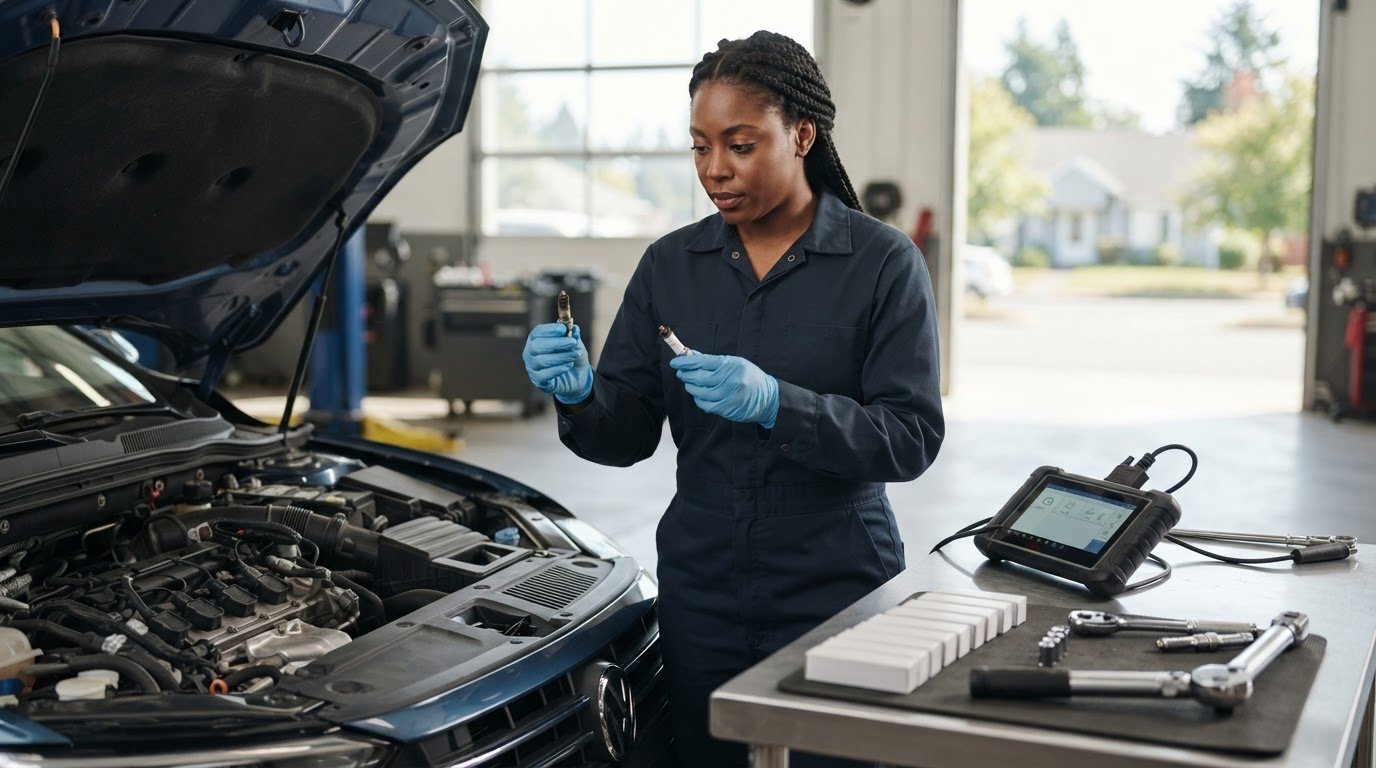
Depending on the vehicle and initial findings, hesitation may lead a technician to consider several areas, including fuel delivery, ignition parts, the air intake, sensors, or electrical connections. A check of one area doesn’t automatically mean it’s faulty. Each finding needs to be weighed against the rest of the evidence.
- Fuel delivery components and related connections
- Ignition parts and their electrical connections
- Air intake passages and relevant sensors
- Wiring or connections related to the reported symptom
A road test may help when appropriate and safe for the reported concern. It gives the technician a chance to observe the vehicle under conditions similar to those you described. The symptom may not appear on every drive, so a normal-feeling trip doesn’t settle the question by itself. Notes about speed, temperature, or engine load can help guide what to observe.
Good diagnosis comes from matching what the vehicle does with what the tests show. That helps distinguish a useful lead from a confirmed finding and gives you a clearer basis for deciding what should happen next. On Top Diesel & Automotive provides diagnostics for passenger vehicles and trucks, and its technicians can explain findings before recommending related repairs. Learn about driveability diagnostics.
Diagnostic Scan vs. Driveability Testing: What Each Can Tell You
A scan can be a useful first step, but it doesn’t always finish the investigation. An OBD-II system may store a trouble code when it detects a condition or circuit outside expected operation. That code is a clue for a technician to interpret, not automatic proof that a particular part has failed. An intermittent concern may not store a code or turn on a warning light.
A scan retrieves information from the vehicle’s computer. Driveability testing may add an inspection, targeted checks, and an attempt to reproduce the reported symptom. The right next step depends on the vehicle and the available evidence. For a broader look at diesel-specific checks, see diesel engine diagnostics and what to expect.
| Diagnostic step | What it can tell you |
|---|---|
| Code retrieval | Whether the computer has stored codes, and which system or condition they may relate to. |
| Visual inspection | Whether visible wear, damage, loose connections, or other obvious concerns deserve closer attention. |
| Component testing | Whether a selected part or circuit behaves as expected under the conditions tested. |
| Symptom reproduction | Whether the technician can observe the concern under conditions similar to those reported. |
What an OBD-II scan can reveal
A code may point toward a system, circuit, or detected condition. The technician considers it alongside the driver’s description and other findings. For instance, a code involving a sensor circuit doesn’t establish by itself whether the sensor, its wiring, or another factor is responsible. Related data can add context, but it still needs careful interpretation. A warning light or code is helpful evidence, not a complete explanation.
Why confirmation may require additional testing
Inspection or a targeted component check can help test a lead suggested by a scan. If an electrical connection is being considered, for example, a technician may inspect or test it rather than assume it’s the cause. The checks selected depend on the vehicle, the reported behavior, and what earlier results show. This keeps the diagnosis tied to evidence instead of replacing parts based on a code alone.
Diesel warning lights can have different possible explanations, so a code should be read in context. This overview of common diesel check-engine light causes offers additional background. On Top Diesel & Automotive’s technicians handle diagnostics for passenger vehicles and trucks, using findings to guide practical next steps. Explore driveability diagnostics as part of the shop’s diagnostic service.
How to Prepare for a Driveability Diagnostic Appointment
A little preparation can help the technician understand a problem that doesn’t happen on every trip. You don’t need to identify the faulty part. Describe what the vehicle does and the conditions around it. If you’re looking for a driveability diagnostic near me , a short, accurate account of the symptoms gives the diagnostic process a useful place to start.
Before your appointment, make a few notes:
- Timing and frequency: When did you first notice the issue, and how often does it happen?
- Driving conditions: Does it occur during starting, idling, acceleration, steady-speed driving, or when the vehicle is under load?
- Engine temperature: Is the engine cold, warming up, or already warm when the symptom begins?
- Other signs: Have you noticed a warning light, unusual sound or smell, vibration, smoke, or a change in fuel economy?
- Recent changes: Did the concern begin after maintenance or a repair, or has the way the vehicle starts or runs changed?
Details that help technicians reproduce the concern
Describe what was happening just before the symptom appeared. For example, note whether the vehicle was pulling away from a stop, idling in traffic, cruising steadily, or climbing a hill. If it happens only occasionally, say so and share whether the pattern is becoming more frequent. A concise timeline is more useful than a guess about which component may be failing.
Include relevant maintenance and repair history, even if you’re unsure whether it’s connected. That information gives the technician context, but it doesn’t establish the cause on its own. Keep your notes simple and factual, such as, “It stumbled once after a cold start,” rather than naming a suspected part.
What to share when you schedule service
When you arrange a diagnostic, identify whether the vehicle is a passenger vehicle or a truck, then describe the main symptom in plain language. Mention any warning lights, recent repairs, and changes in starting or performance. A few clear details help set the context for the appointment. On Top Diesel & Automotive handles diagnostics for passenger vehicles and trucks.
If you have maintenance records or notes about when the issue occurred, keep them handy. Don’t worry if you can’t remember every detail. Share what you know, and avoid presenting a suspected cause as a confirmed fault.
Put safety first. If the vehicle stalls repeatedly, loses power in a way that makes it unsafe to control, or behaves dangerously, pull over safely and stop driving. Don’t try to reproduce a hazardous symptom on the road. Explain what happened when arranging service so the concern can be addressed with safety in mind.
Arrange a driveability diagnostic and share the symptoms you’ve recorded.
Driveability Diagnostics at On Top Diesel & Automotive: Clear Findings, Practical Next Steps
When a vehicle hesitates or loses power, several systems may be involved, and similar symptoms don’t necessarily point to the same repair. On Top Diesel & Automotive is a full-service automotive and diesel repair shop where ASE-certified technicians handle diagnostics for passenger vehicles and trucks. A careful diagnostic gives the technician a basis for explaining what the evidence shows before discussing related repair options.
For drivers searching for a driveability diagnostic near me , knowing what happens after the initial checks can make the next decision more straightforward. The findings help direct attention to the relevant repair area, whether it involves engine performance, fuel delivery, electrical connections, or another system. The right recommendation depends on the results for your vehicle, not on a symptom or code alone.
Automotive and diesel experience for varied driveability concerns
On Top Diesel & Automotive provides diagnostics and engine, electrical, fuel-system, and transmission repairs. This range matters because a stumble or loss of power can have more than one possible explanation. Technicians use the vehicle’s reported behavior and diagnostic evidence to guide what to investigate, then connect supported findings with practical next steps. If reduced power is part of a diesel concern, common causes of diesel engine power loss can provide helpful background.
Not every symptom leads to a repair in each of these areas. Instead, the investigation considers relevant systems without treating one clue as a complete answer. A technician’s experience across automotive and diesel work can help put separate findings into context, while keeping the discussion focused on what the vehicle’s tests and inspection support.
From diagnostic findings to a repair decision
Once testing is complete, the technician should explain the findings in plain language and describe the recommended next step. You should be able to understand what was observed, how it relates to the concern, and what repair is being proposed. If anything is unclear, ask for an explanation before deciding. Understanding the basis for a recommendation helps you make an informed choice.
Diagnostics are the careful first step. They help determine which repair, if any, is supported by the evidence. On Top Diesel & Automotive can discuss your vehicle’s symptoms and diagnostic process with you. Learn about scheduling a driveability diagnostic.
Take the Next Step Toward a Better-Running Vehicle
Intermittent hesitation can leave you second-guessing every drive, especially when the vehicle seems fine by the time you reach a repair shop. You don’t need to arrive with a diagnosis. A straightforward description of what you’ve noticed gives the technician a place to begin, and careful testing can help guide the next decision.
If you’re searching for a driveability diagnostic near me , On Top Diesel & Automotive offers an evidence-led approach for passenger vehicles and trucks. ASE-certified technicians handle automotive and diesel diagnostics and repairs, including engine, electrical, fuel-system, and transmission concerns. The findings help clarify what the evidence supports and which repair options make sense, so you can decide how to move forward.
Bring your notes and share what has changed. Schedule a driveability diagnostic with On Top Diesel & Automotive to start with a clear assessment of your vehicle’s symptoms.
Frequently Asked Questions
Can a diagnostic scan find the cause of intermittent hesitation?
A scan can provide useful clues, but it may not identify the cause by itself. It can show codes or related vehicle information for a technician to interpret alongside your description and test findings. An intermittent issue may not be active or recorded during the scan. If you’re searching for a driveability diagnostic near me , look for testing that considers how the vehicle behaves, not just what a scan reports.
Is it safe to keep driving when my vehicle hesitates or stalls?
It depends on how the vehicle responds, but repeated stalling or a loss of power that makes it hard to control calls for caution. If that happens, move out of traffic and stop somewhere safe. Don’t continue driving if the vehicle feels unsafe. For a brief hesitation without a loss of control, arrange a professional assessment and pay attention to whether the symptom worsens or becomes more frequent.
What should I tell a mechanic about an intermittent driveability problem?
Describe what you felt, when it happened, and what the vehicle was doing just before it began. For example: “It hesitated once while pulling away after a stop, but drove normally afterward.” Mention warning lights, changes in sound or vibration, and any recent work. If a passenger has safely recorded a sound or dashboard warning, that may provide helpful context. Don’t record or use a phone while driving.
Does a check-engine code mean the named part needs replacement?
No. A code generally identifies a detected condition or circuit, not a guaranteed failed component. A code related to a sensor circuit, for example, doesn’t prove the sensor itself is defective. Its wiring or another issue may also need investigation. A technician should use relevant checks to assess the code before recommending a repair. Replacing a part based on the code label alone may not address the underlying problem.
How is a driveability diagnostic different from a code scan?
A code scan retrieves information stored by the vehicle’s computer. A driveability diagnostic uses that information as one piece of evidence and may include an inspection, targeted component checks, or efforts to reproduce the concern. The scope depends on the vehicle and reported problem. A scan can be a useful starting point, while further testing helps determine which findings relate to the way the vehicle is running.
Can a driveability diagnostic help with diesel trucks as well as cars?
Yes. On Top Diesel & Automotive provides diagnostic services for passenger vehicles and trucks, including diesel vehicles. The process begins with the vehicle’s symptoms and available evidence, while the checks are selected to fit the truck’s design and systems. If your truck hesitates, runs unevenly, or loses power, describe when it happens and share any recent repair or maintenance history to help frame the investigation.
How much does a driveability diagnostic cost?
The cost depends on the vehicle and the diagnostic work needed to investigate its symptoms, so there isn’t one amount that applies to every concern. A basic code scan and a more involved driveability investigation are different scopes of work. Before proceeding, ask what the diagnostic covers and how any recommended repair would be handled separately. That helps you understand the proposed work before making a decision.