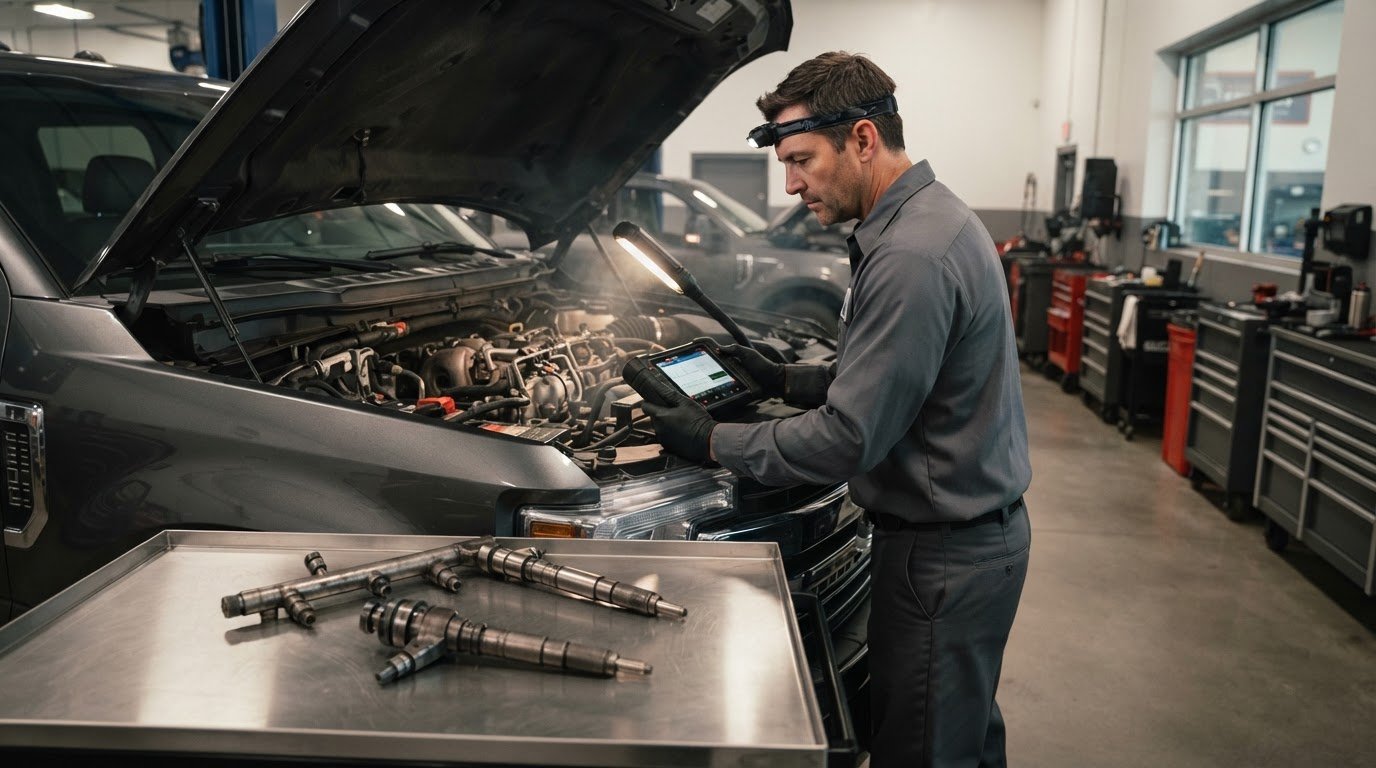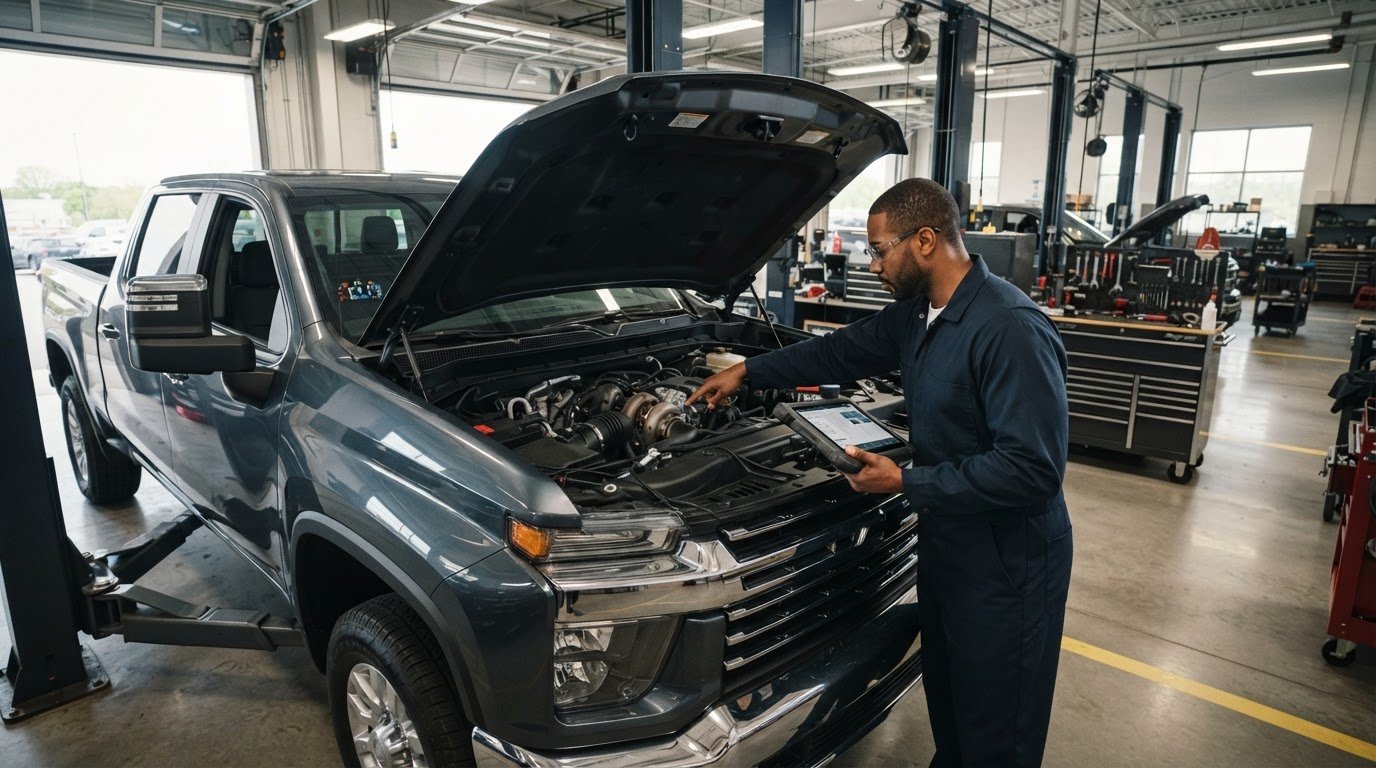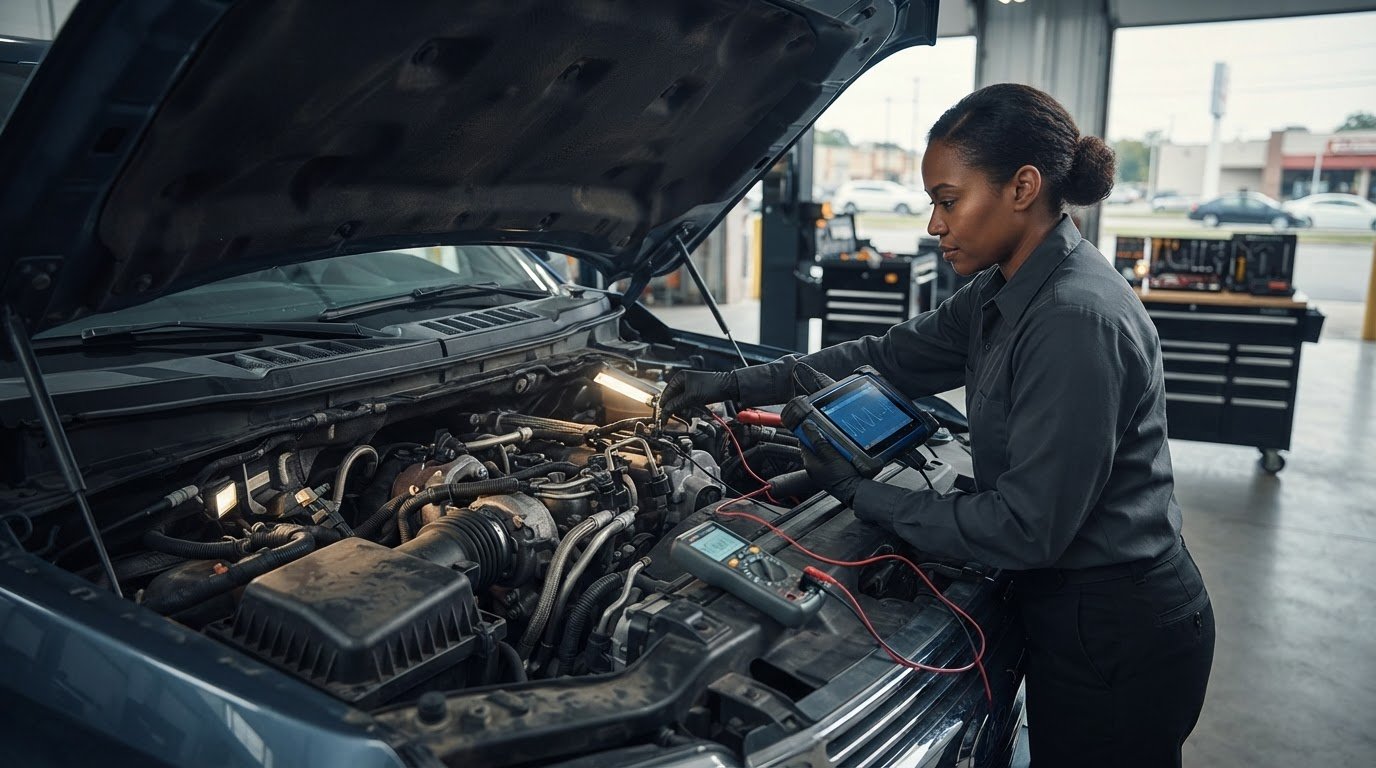
What if a rough idle or slow start isn’t caused by worn spark plugs? These symptoms can point to several issues, so replacing parts before finding the cause may not solve the problem. If you’re searching for spark plug replacement near me, a careful diagnosis is a sensible place to start.
When a vehicle isn’t running as it should, it helps to know what changed and when. Spark plug types and service intervals vary by vehicle, and similar symptoms can come from other ignition or engine concerns. A technician can inspect the plugs, assess related components, and use diagnostic work to determine what service is appropriate.
This guide covers warning signs that warrant an inspection, how technicians assess spark plugs, and what replacement involves. You’ll also learn how to weigh DIY work against professional service, what information to bring, and why the correct plugs and vehicle-specific procedures matter.
Key Takeaways
- Rough running, hard starts, or reduced performance can warrant an inspection, but one symptom alone doesn’t confirm a spark plug problem.
- Use your owner’s manual or manufacturer schedule as the starting point for understanding when your vehicle’s spark plugs may need attention.
- When searching for spark plug replacement near me, consider whether the job’s access, tools, and vehicle-specific steps suit your experience and comfort level.
- Exact plug fitment and replacement procedures depend on the vehicle and engine, so technicians follow the applicable manufacturer instructions.
- Bring your vehicle details, symptoms, and maintenance history to help ASE-certified technicians provide focused tune-up and diagnostic support.
Spark Plug Replacement Near Me: Symptoms That Deserve Attention
Rough running or a noticeable drop in performance can make you wonder whether the spark plugs need replacement. A misfire may feel like a brief stumble, hesitation, or shake, especially while accelerating or sitting at idle. Other possible signs include uneven idling, harder starting, and reduced acceleration. These changes are worth noting, but none confirms the cause on its own.
Spark plug symptoms can overlap with other ignition or engine problems, so the same driving change may have more than one explanation. A technician needs to assess the vehicle rather than diagnose it from a short description. Spark plugs help ignite the air-fuel mixture in an engine; the Spark Plug Function and Components overview explains their basic design and role.
Which driving changes can point to worn spark plugs?
A misfire can feel like a momentary loss of power, a shudder, or uneven engine response. At idle, the engine may feel less steady than usual. During acceleration, it may hesitate instead of building speed smoothly. These patterns make spark plugs one item to inspect, but they don’t establish that replacement is needed.
Harder starting or irregular running also calls for assessment, not automatic parts replacement. Pay attention to what changed from the vehicle’s normal behavior and when it happens. Symptoms can be mild or pronounced, and their combination varies with the vehicle and engine condition. Recording those details gives a technician useful context without requiring you to guess at the fault.
When should a driver arrange an inspection?
Arrange an assessment if a symptom persists, gets worse, or begins to interfere with normal driving. Note whether it happens during a cold start, while idling, or when accelerating. If a warning light appears, record which one and whether it stays on or flashes. These observations can help focus the inspection.
A brief symptom description can’t establish whether a vehicle is safe or unsafe to drive. If the engine’s behavior changes sharply or you’re concerned about continuing, get professional guidance instead of relying on a guess. Avoid repeatedly testing the vehicle in ways that worsen the symptom.
At On Top Diesel & Automotive, ASE-certified technicians assess spark plug concerns through diagnostic and tune-up service. If you’re looking into spark plug replacement near me , describe what the vehicle is doing and when you notice it. That gives the technician a useful starting point before deciding whether replacement or another step is appropriate.
How Technicians Decide Whether Spark Plugs Need Replacement
A sound recommendation starts with the vehicle’s details and service history, not with a part chosen from a symptom alone. Spark plug type, access, and maintenance timing can differ by vehicle and engine. A technician considers those details alongside the current concern to decide whether the plugs need attention or a broader diagnosis makes more sense.
- Identify the vehicle. Confirm the year, make, model, and engine so the correct service information can be used.
- Review maintenance guidance. Check the owner’s manual or manufacturer schedule for recommended inspection or replacement timing.
- Assess the symptoms. Discuss what you’ve noticed, when it happens, and whether it has changed over time.
- Inspect and diagnose. Examine the plugs and consider related ignition or engine concerns if the cause isn’t clear.
- Recommend next steps. Explain whether replacement, further testing, or another repair is appropriate based on the findings.
How to use the vehicle’s maintenance schedule
Look up the maintenance schedule for the exact year, make, model, and engine. The owner’s manual or manufacturer guidance is the starting point, rather than a mileage rule meant to apply to every vehicle. Driving conditions and vehicle-specific instructions can also affect maintenance planning, so follow the guidance that matches your vehicle. The correct replacement interval is vehicle-specific and should follow manufacturer guidance.
If you don’t have the manual, vehicle information and maintenance records can help a technician find the applicable guidance. A missing service entry doesn’t automatically mean the plugs need replacing, but it gives the assessment useful context. Symptoms matter too: a vehicle may need an inspection before scheduled service if its behavior has changed.
Why similar symptoms may need a broader diagnosis
Spark plugs are only one part of an engine’s ignition system. Related components, such as ignition coils or plug wires where fitted, may also need attention. Engine conditions can produce similar running concerns, so replacing plugs without checking the evidence may leave the original issue unresolved. Inspection and diagnostic testing help narrow the possible cause before parts are recommended.
For persistent or unclear engine symptoms, a broader diagnostic approach can help organize the next steps. The diesel engine diagnostics guide explains what drivers can expect from that process. On Top Diesel & Automotive’s ASE-certified technicians provide diagnostic and tune-up support, assessing the concern before recommending replacement. If you’re searching for spark plug replacement near me , bring the vehicle details and any maintenance records to help the evaluation get off to a clear start. Arrange diagnostic support when you’re ready to take the next step.
DIY or Professional Spark Plug Replacement: How to Choose
Whether to replace spark plugs yourself or have a technician handle the work depends on more than confidence under the hood. Consider your experience, the room available around the engine, the tools required, and whether you can follow the vehicle-specific procedure accurately. Choose the option that lets the work be completed carefully without guessing at parts or steps.
Exact plug fitment and replacement procedures depend on the vehicle and engine. A plug that looks similar may not match the required specification, and access can range from straightforward to difficult. Professional service also gives a technician the opportunity to inspect related ignition concerns while assessing the plugs. The best decision starts with the correct information about your vehicle and the work involved.
When a capable owner may consider DIY work
If you have hands-on experience and the plugs are accessible, start with the service procedure and parts specifications for your exact vehicle. Check which tools the job requires and whether the engine layout leaves clear working room. If fitment, the procedure, or a component’s condition is unclear, pause rather than force the next step. Stopping to reassess is better than continuing based on a guess.
When professional service is the more practical choice
Professional assessment makes sense when symptoms persist, you’re unsure what’s causing them, or the plugs are difficult to reach. A technician can evaluate the plugs alongside related ignition components and use diagnostic work to narrow the cause before recommending parts. That broader view is useful when replacement alone may not address the concern.
Use this comparison to think through what the job involves:
- Experience: DIY work is more suitable when you can follow repair instructions and identify the correct parts for your vehicle.
- Access: A tight engine layout or components that need to be moved can make the task more involved.
- Tools and procedure: The required tools and installation steps vary, so check the vehicle’s service information before starting.
- Uncertain symptoms: If you don’t know whether plugs are the cause, diagnosis can help guide the decision before replacement.
Keep spark plug service in the context of your vehicle’s overall maintenance. Follow the schedule for your specific vehicle rather than relying on a general rule. The engine oil change and maintenance guide offers broader context for keeping up with routine service.
If you’re searching for spark plug replacement near me because of an ongoing concern, you don’t need to arrive with a diagnosis. Bring your vehicle details and describe what you’ve noticed. On Top Diesel & Automotive’s ASE-certified technicians provide tune-up and diagnostic support to assess spark plug concerns. Explore diagnostic and tune-up support as a practical next step.
What Happens During a Professional Spark Plug Replacement?
A professional replacement follows the vehicle’s service information rather than a one-size-fits-all routine. The technician reviews the vehicle details and reason for the visit, then checks whether replacement is appropriate. Access and exact steps vary by engine, so some jobs are more involved than others. The goal is to use the correct parts and follow the manufacturer’s instructions.
The process generally follows a few practical stages:
- Review vehicle details. Confirm the vehicle and engine, and refer to the applicable service information.
- Inspect before removal. Assess the plugs and accessible related ignition components for signs of wear or other concerns.
- Access the plugs. Move or remove components as needed for that vehicle, following the manufacturer’s procedure.
- Replace as appropriate. Fit the specified plugs and install them using the vehicle-specific instructions.
- Check operation. Start or run the engine as appropriate and assess whether it operates as expected after the work.
How fitment and inspection guide the work
Plug type and fitment must match the vehicle manufacturer’s specifications. The technician uses vehicle details to identify the correct parts and procedure rather than choosing by appearance alone. During inspection, accessible plugs and related ignition components may be checked for visible wear or other concerns. Good replacement work uses the correct parts and follows the procedure specified for that vehicle.
The inspection can also show whether the plugs are part of a wider concern. If a plug or nearby component shows an unusual condition, the technician can consider it alongside the reported symptoms and other findings. The work isn’t simply removing old plugs and fitting new ones. Inspection helps determine what should happen next.
What service checks can establish afterward
After installation, the technician may check engine operation in a way that suits the vehicle and the work performed. This can help identify whether the original concern remains apparent. It doesn’t prove that every possible cause has been ruled out, and it shouldn’t be treated as a promise of improved performance or fuel economy.
If symptoms persist, further diagnosis may be needed to look beyond the plugs. That could mean reassessing related ignition components or other engine concerns based on the inspection and the vehicle’s behavior. A clear explanation of what was checked and what remains uncertain helps you understand the next step without assuming that more parts must be replaced.
If you’re searching for spark plug replacement near me , On Top Diesel & Automotive’s ASE-certified technicians provide tune-up and diagnostic support for spark plug concerns. Arrange spark plug service to have the work assessed and completed with your vehicle’s requirements in mind.
Getting Spark Plug Service and a Clear Next Step
A few useful details can make a spark plug concern easier to assess. You don’t need to know which part has failed or decide in advance that replacement is the answer. Share what the vehicle is doing and what you know about its maintenance. On Top Diesel & Automotive’s ASE-certified technicians provide tune-up and diagnostic support to determine whether the plugs or another issue need attention.
What information helps the technician assess the concern?
Have the vehicle’s year, make, model, and engine details ready. Describe when the symptom began and the conditions in which you notice it, such as starting, idling, or accelerating. Mention warning lights, recent repairs, and known maintenance history, including when the plugs were last serviced if you have that information. These details help put the concern in context.
A short note on your phone can help you remember specifics, especially if the problem happens only occasionally. Record whether the symptom is steady or intermittent, whether it has changed, and what the vehicle was doing when it appeared. If you’re unsure about a detail, simply say so. Accurate observations are more useful than a guessed diagnosis.
How to move from symptoms to service
The next steps are straightforward: share the symptoms and vehicle details, review what the inspection or diagnostic work finds, then decide on the recommended service. If the findings point to worn or due spark plugs, replacement can be considered. If they suggest another ignition or engine concern, that information can guide a more suitable repair instead.
This approach keeps the decision grounded in evidence rather than assumptions. A technician can explain what was checked, what the findings indicate, and whether more diagnosis is needed before work proceeds. Ask for the reasoning behind a recommendation so you understand how it connects to the symptoms you reported. The aim is a clear path forward, not a rushed choice.
If you’re looking for spark plug replacement near me , On Top Diesel & Automotive can assess your concern through tune-up and diagnostic work. Bring the details you have and describe the change you’ve noticed. The next step may be plug replacement or further assessment, depending on the findings.
Talk with On Top Diesel & Automotive about your symptoms and arrange the service that fits the findings.
Take the Next Step with Confidence
You don’t need to know exactly what’s wrong before asking for help. A clear account of what you’ve noticed, paired with an assessment of the vehicle, can turn uncertainty into a practical plan. That plan may involve spark plugs, another repair, or a better understanding of what to monitor next.
If you’re searching for spark plug replacement near me , focus on an answer that fits your vehicle rather than choosing parts based on symptoms alone. On Top Diesel & Automotive’s ASE-certified technicians provide tune-up and diagnostic services to assess your concern and identify a sensible next step.
Bring your questions, share what the vehicle has been doing, and take the process one step at a time. Talk with On Top Diesel & Automotive about your vehicle’s symptoms and get started with a straightforward conversation. A thoughtful assessment can help you move ahead with greater confidence.
Frequently Asked Questions
Can bad spark plugs damage an engine?
Bad spark plugs can contribute to an engine misfire, but worn plugs don’t automatically mean engine damage. Continuing to drive with a misfire or another engine problem may lead to additional issues, depending on the cause and severity. Persistent shaking, loss of power, or a warning light calls for prompt assessment. This is general guidance, not a diagnosis of your vehicle.
Can I keep driving if my engine is misfiring?
A misfire can affect how your vehicle runs, and it shouldn’t be ignored. The seriousness depends on the cause and what you’re experiencing. Limit unnecessary driving and arrange an assessment, especially if the engine runs poorly or a warning light appears. A brief description can’t establish whether your vehicle is safe to drive, so don’t rely on a remote guess about the cause or repair.
Should all spark plugs be replaced at the same time?
Follow the vehicle manufacturer’s instructions and consider the condition of the plugs before deciding. Many vehicles specify replacing plugs as a set, but that guidance isn’t universal across engines. Finding one plug that looks worn doesn’t by itself establish the right service for the rest. A vehicle-specific assessment can help determine whether the manufacturer calls for a set-based replacement or another approach.
How long does spark plug replacement take?
There isn’t one reliable time estimate for every vehicle. The job can vary with engine design, how easily the plugs can be reached, and whether inspection points to related concerns that need attention. A technician can explain the work after reviewing your vehicle and symptoms. If you’re planning around the service, ask for an estimate based on those details rather than relying on a general timeframe.
How can I tell whether the problem is a spark plug or an ignition coil?
Symptoms alone usually can’t distinguish a spark plug issue from an ignition coil problem, since either can contribute to a misfire. A warning code or a single driving symptom also shouldn’t be treated as proof that one part has failed. Vehicle-specific inspection and diagnostic testing can help narrow the cause. If you’re looking for spark plug replacement near me , focus on diagnosis before choosing a part.
Do diesel engines use spark plugs?
Diesel engines generally use compression ignition rather than spark plugs. Some use glow plugs to support starting in certain conditions, but glow plugs and spark plugs are different components and aren’t interchangeable. Spark plug replacement mainly applies to gasoline engines. If a diesel vehicle has a starting or running concern, it needs diagnosis suited to its engine rather than an assumption that spark plugs are the cause.