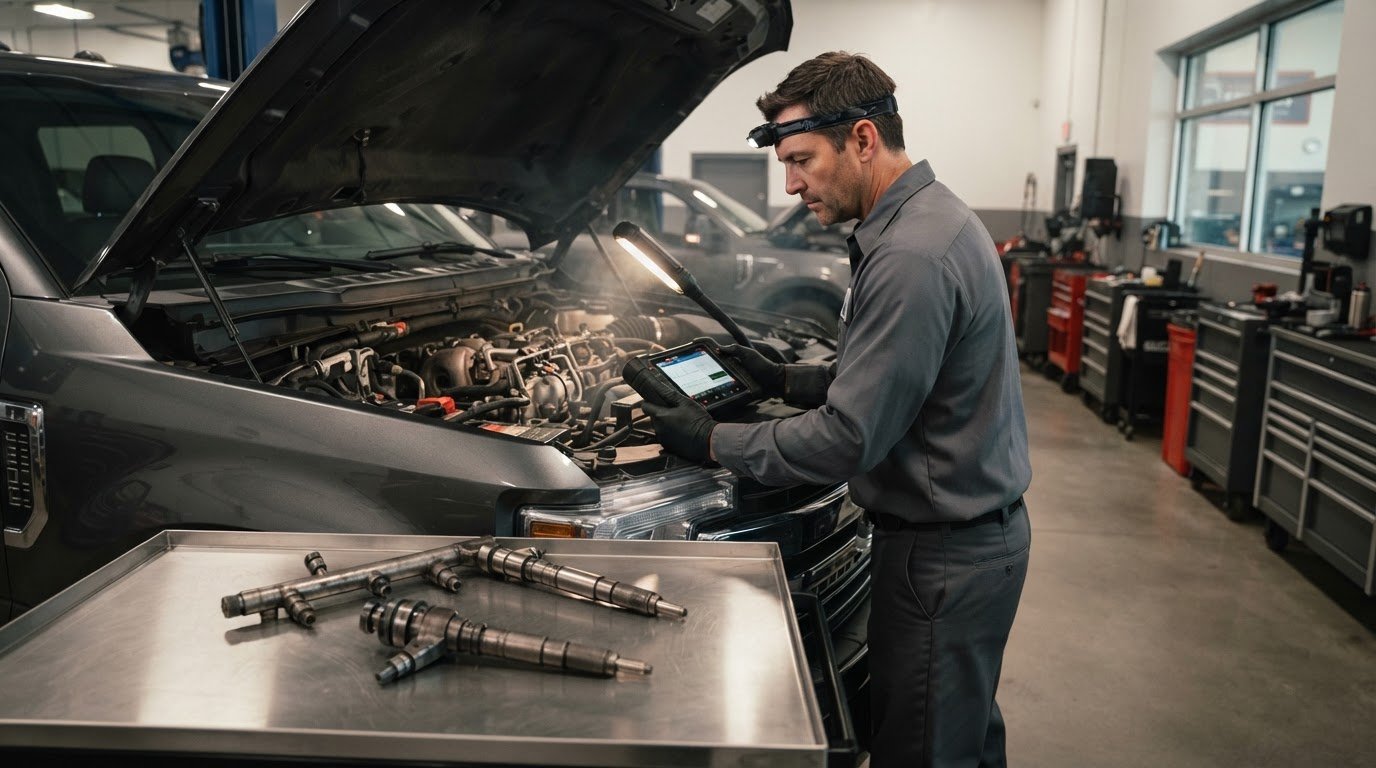
What if warm air from your vents doesn’t mean the compressor is the problem? If you’re searching for AC compressor replacement near me, inconsistent cooling or new noises can make a major repair seem inevitable. Those symptoms deserve attention, but they can also come from other parts of the air-conditioning system.
It’s understandable to want a clear answer before agreeing to a repair. Careful diagnosis helps determine whether the compressor is failing or another issue is affecting cooling. At On Top Diesel & Automotive, ASE-certified technicians provide Heating & Air service and diagnostics, starting with the cause of the problem.
Here, you’ll learn which warning signs call for professional diagnosis, how a technician checks the compressor and rules out other possible problems, and what to expect if replacement is needed. The right repair depends on test results, not symptoms alone, so understanding the process can help you discuss your vehicle’s next steps.
Key Takeaways
- Warm or inconsistent cabin air can signal an AC problem, but symptoms alone can’t confirm compressor failure.
- Technicians inspect related parts and test system operation before recommending a repair.
- Compressor replacement differs from addressing another failed component or a refrigerant issue.
- If you’re searching for AC compressor replacement near me, noting when symptoms occur can help you describe the problem clearly.
- On Top Diesel & Automotive provides Heating & Air diagnostics and repair with ASE-certified technicians.
AC Compressor Failure: Warning Signs That Deserve Attention
Warm air, uneven cooling, or a new noise can point to an air-conditioning fault, but none of these symptoms proves the compressor has failed. Refrigerant loss, an electrical issue, a blocked condenser, or another system problem can cause similar symptoms. Diagnosis helps identify the source instead of treating only what you notice.
AC symptoms identify a problem area, not a failed part. Replacing a compressor without finding the cause can mean treating the wrong issue. The compressor is one part of a larger system, as described in this overview of Air Conditioning Systems. If you're searching for AC compressor replacement near me, treat warning signs as a reason to arrange an evaluation, not as a self-diagnosis.
Warm Air, Inconsistent Cooling, and Other Performance Changes
If the vents blow air that feels warmer than usual, or cooling comes and goes during a drive, note when it happens. A low refrigerant charge or leak, an electrical fault, or trouble with another AC component can affect cooling just as a compressor fault can.
Separate cooling from airflow, too. If little air comes out even when the fan is turned up, the issue may involve air movement through the cabin rather than the compressor. A change in temperature with steady airflow is a different clue. Record whether the problem occurs at startup, after driving for a while, or only in certain conditions.
Noises, Cycling, and Visible Clues
Clicking, grinding, or rattling that begins when the AC runs deserves attention, especially if the sound seems to come from the belt area. The noise could involve the compressor, clutch, belt, or another nearby part, so sound alone can’t identify the faulty component. If a harsh noise appears, switch the AC off when practical and arrange an inspection rather than continuing to run it.
Pay attention to changes in operation, too. The system may cool briefly, then blow warm air, or cycle differently than usual. Cycling can be affected by several conditions, including refrigerant or electrical issues. Visible residue near an AC component is also worth mentioning, but it doesn’t confirm a specific fault.
Keep your observations simple and specific. Note:
- Whether the air is warm, mildly cool, or changes over time.
- Whether airflow is weak or the air temperature is the main change.
- When clicking, grinding, or rattling starts and whether it stops with the AC.
- Any visible change you noticed without touching parts.
Don’t handle refrigerant lines or moving belt components. An AC system can contain pressurized refrigerant, and belts can move unexpectedly while the engine is running. Share your notes with the technician so they can use your observations as a starting point for testing.
How Technicians Diagnose an AC Compressor Problem
A sound diagnosis follows the evidence before identifying a part. The compressor circulates and pressurizes refrigerant so it can move through the air-conditioning system and help carry heat away from the cabin. If it isn’t working properly, cooling can suffer, but a similar symptom may come from another part or condition.
A symptom points to a concern; testing helps confirm which component has failed. Warm air or a noise alone doesn’t prove that the compressor needs replacement. A careful diagnosis evaluates how the system behaves and checks related parts before recommending a repair.
What the Compressor Does in the AC System
The compressor works with the condenser, expansion valve, and evaporator as refrigerant circulates through the AC system. In simple terms, the compressor moves and pressurizes refrigerant, the condenser helps release heat, and the expansion valve controls refrigerant flow toward the evaporator. The evaporator then helps cool the air sent into the cabin. Because these parts work together, a fault elsewhere can affect overall cooling, too.
What a Diagnostic Visit Can Establish
Diagnosis starts with your account of what changed and when. A technician can check how the AC operates, inspect connected components, and use system tests to narrow down the cause. The exact checks depend on the vehicle and symptoms. The process uses multiple clues rather than drawing a conclusion from one observation.
A practical sequence may include:
- Confirm the complaint by checking the reported cooling change or unusual operation.
- Inspect related parts, such as the compressor area, belt, clutch, wiring, and other accessible AC components.
- Test system operation, which may include checking whether the compressor clutch engages, assessing system pressures, and looking for electrical faults.
- Interpret the results together to determine whether the compressor is the likely cause or another repair is needed.
For example, if the clutch doesn’t engage, that observation alone doesn’t establish that the compressor itself has failed. A related electrical issue may be involved. Likewise, a pressure reading needs to be considered alongside system operation and component condition. Testing helps distinguish these possibilities and avoid unnecessary part replacement.
Findings can vary by vehicle design and by what the initial checks reveal. A technician may need to investigate a suspected refrigerant leak or electrical concern before identifying the cause. If you’re looking up AC compressor replacement near me, a useful repair conversation connects the test findings to the recommendation, including why the compressor is or isn’t the source of the problem.
At On Top Diesel & Automotive, automotive AC diagnostics help guide a straightforward repair discussion. Sharing when the problem occurs gives the technician a helpful starting point, and diagnosis establishes the next step before parts are recommended.
Compressor Replacement vs. Other AC Repairs: How Scope Is Decided
Warm air or inconsistent cooling doesn’t automatically call for a new compressor. The repair depends on inspection and test results, since refrigerant condition, electrical faults, airflow problems, and compressor failure can affect AC performance in different ways. Comparing possible repair paths can help explain why a recommendation should be tied to the vehicle’s findings.
| Repair path | What it addresses | How the scope is determined |
|---|---|---|
| Compressor replacement | A compressor found to be mechanically faulty | Testing supports compressor failure, and the technician assesses related system components and condition. |
| Another AC repair | A fault in a different component, such as an electrical part or airflow-related component | Inspection and test results point to an issue outside the compressor. |
| Refrigerant-related service | Refrigerant condition, including a low charge or suspected leak | System checks indicate a refrigerant concern that needs to be addressed. |
When Diagnosis Points Toward Compressor Replacement
Replacement is considered when testing identifies the compressor as faulty, not simply because the cabin air feels warm or a noise is present. The technician also considers the condition of connected components and the AC system as a whole. The exact parts and work needed can vary by vehicle and findings, so a standard parts list won’t fit every situation.
A failed compressor may be the central issue, but other system concerns can affect the repair scope. The technician’s assessment establishes whether related components need attention as part of the work. Replacement is a reasoned repair recommendation, not a promise that changing one part will resolve every cooling complaint.
When Another AC Repair May Be Appropriate
If testing points to an electrical fault, a refrigerant leak, or an airflow issue, addressing that finding may be more appropriate than replacing the compressor. These problems can produce similar comfort complaints but call for different repairs. A recharge addresses refrigerant condition; it doesn’t repair a mechanically failed compressor or substitute for fixing a confirmed component failure.
Likewise, refrigerant service alone won’t correct weak airflow caused by an airflow-related problem. The right path follows inspection findings rather than a symptom checklist. A clear explanation connects the proposed repair to what the technician found, including whether the issue involves the compressor, another component, or refrigerant condition.
If refrigerant service is part of the discussion, the car AC recharge guide explains how a recharge works and what signs may point to that service. For drivers searching AC compressor replacement near me, understanding the difference between replacement and other repair paths makes it easier to follow the diagnosis and discuss the recommended work.
Before AC Compressor Replacement: Practical Steps for Drivers
A little preparation can make an AC service visit more useful. Your observations help the technician understand what changed and when, while diagnosis establishes whether the compressor or another part is responsible. You don’t need to identify the failed component yourself. Describe what you’ve noticed, then discuss the findings and repair scope before work proceeds.
What to Note Before the Appointment
Write down when the cooling problem began and whether it happens every time or comes and goes. Note how cooling changes when the AC is on, when any noise starts, and whether you’ve noticed an unusual odor or other change in operation. Include recent AC work or related changes in vehicle behavior. These details give the technician a useful starting point without relying on a guess about the failed part.
A short checklist can help you keep the details straight:
- Describe when the cabin stopped cooling as expected and whether the change is constant or intermittent.
- Note whether the sound occurs when the AC is switched on, while it’s running, or after it’s turned off.
- Record whether cooling improves or worsens during a drive or changes with AC use.
- Mention recent AC service or other changes you’ve observed, even if they seem unrelated.
If the AC produces severe grinding or another concerning change, stop using the AC and arrange an evaluation rather than continuing to run it. Don’t reach near belts or refrigerant lines to investigate. Service timing and repair scope depend on the vehicle and what diagnosis reveals, so avoid assuming a particular timeline before the system has been assessed.
Questions That Help You Understand the Repair Plan
Once the technician has checked the system, ask which findings point to the compressor or another component. Clarify which parts and work are included in the recommended repair, and how the completed work will be checked. Straightforward answers connect the recommendation to the diagnosis and help you understand the next step.
Useful questions include:
- Which test or inspection findings support this repair?
- Did the diagnosis identify a compressor fault, or a problem elsewhere in the AC system?
- What components and related work are included in the proposed scope?
- How will you check that the AC system is operating after the repair?
These questions help make the repair conversation clear, especially if the recommended work involves more than one component. If you’re searching for AC compressor replacement near me, bring your notes and ask about the diagnosis behind the recommendation. On Top Diesel & Automotive provides Heating & Air service and diagnostics. Arrange an AC system evaluation to discuss your vehicle’s symptoms and next steps.
AC Compressor Replacement Service: What to Expect from On Top Diesel & Automotive
A compressor concern can bring several questions: Is the compressor truly at fault? What work will the repair involve? How will you know whether the AC is operating afterward? At On Top Diesel & Automotive, Heating & Air service and diagnostics provide a straightforward process. ASE-certified technicians start with the symptoms you report, assess the system, explain the findings, and connect the recommended work to the diagnosis.
A Clear, Diagnostic-Led Service Process
Your description helps the technician understand what to examine, but the repair recommendation comes from inspection and testing. Findings may point to the compressor or another AC component, so the technician explains what the checks show and what work is recommended. If compressor replacement is indicated, the repair scope is based on your vehicle and its diagnosed condition, not a one-size-fits-all parts list.
A compressor-focused visit generally moves through a few clear stages:
- Review the symptoms. Share what you’ve noticed, including changes in cooling, noises, or when the issue occurs.
- Assess the AC system. The technician uses inspection and diagnostic checks to evaluate the compressor and related components.
- Explain the findings. You’ll have a chance to understand which problem the checks identified and why a particular repair is recommended.
- Discuss the repair scope. The work is explained before it proceeds, including any related components indicated by the findings.
This approach keeps the conversation grounded in what the vehicle needs. If testing points to another AC fault instead of the compressor, the explanation should make that distinction clear. When replacement is recommended, trusted parts are used. The specific additional parts and repair steps depend on the vehicle and diagnostic findings.
Getting Back to Reliable Cabin Cooling
After the repair, the technician checks AC operation as appropriate for the work performed. These checks help assess how the system is functioning, but no repair guarantees against every future AC concern. The precise work and verification depend on the vehicle and the condition found during diagnosis.
You can help the visit go smoothly by bringing your symptom notes and asking what the test results mean for your vehicle. If a recommendation includes more than compressor replacement, ask how each part of the work relates to the findings. A clear explanation gives you a practical basis for understanding the repair plan without needing to diagnose the system yourself.
If you’re searching for AC compressor replacement near me, On Top Diesel & Automotive provides automotive and diesel repair, including Heating & Air service and diagnostics. Compressor replacement may be appropriate when the diagnosis supports it; other findings can point to a different solution. Talk with On Top Diesel & Automotive about AC service.
Take the Next Step Toward Comfortable Driving
Uncertain cooling can make every drive less comfortable, but symptoms alone can’t tell you whether a compressor needs replacement. Treat what you’ve noticed as useful information, then let an evaluation guide the repair conversation. If you’re searching for AC compressor replacement near me, look for a clear explanation of what the inspection found and why the recommended work fits your vehicle.
At On Top Diesel & Automotive, ASE-certified technicians provide automotive and diesel repair, including Heating & Air service and diagnostics. The goal is a practical conversation about your vehicle’s condition and the next sensible step, without assuming a particular part has failed.
Share what’s changed with your cabin cooling and discuss the diagnostic findings with the shop. Arrange AC service with On Top Diesel & Automotive to take an informed step toward addressing the problem.
Frequently Asked Questions
Can warm air from the vents mean the AC compressor has failed?
Yes, warm vent air can occur when the compressor isn’t working, but it doesn’t confirm compressor failure. Before describing the problem, note whether the fan is moving air normally and whether the temperature changes across different fan or AC settings. For example, strong airflow that stays warm differs from barely any air coming through the vents. These observations help describe the issue, but a technician’s checks are needed to identify the cause.
What noises can an AC compressor make when it is failing?
A failing compressor may be associated with grinding, rattling, or clicking sounds, but similar noises can come from nearby parts, including the belt or clutch. Notice whether the sound begins as the AC is switched on, continues while it runs, or is present even with the AC off. That timing is useful context, not a way to identify the failed part. Avoid reaching into the engine bay to investigate a noise.
Can I drive my car if the AC compressor is making noise?
It depends on the noise and whether other vehicle problems are present, so there isn’t a safe answer for every car. Turn off the AC if it triggers a harsh or worsening sound, then pay attention to whether the noise continues. If it does, or you notice another serious change such as an overheating warning, pull over safely and arrange assistance rather than continuing the trip. Don’t inspect moving parts yourself.
Does an AC recharge fix a failed compressor?
No. A recharge adds refrigerant to address a refrigerant-related condition; it doesn’t repair a compressor with a mechanical failure. If refrigerant is low, the reason for the loss matters, since adding refrigerant alone won’t repair a leak. A technician can determine whether refrigerant service is appropriate or a component needs repair. Avoid treating repeated warm air as a reason to keep adding refrigerant without diagnosis.
How do technicians know whether the AC compressor needs replacement?
Technicians combine system operation checks with inspection and tests rather than relying on one symptom. They may check whether the compressor clutch engages, assess system pressures, inspect related components, and look for electrical faults. The results help distinguish a compressor concern from a problem elsewhere. If you’re searching for AC compressor replacement near me, ask how the specific findings support the recommended work and what other causes were considered.
What happens during an AC compressor replacement?
The process varies by vehicle and the condition of its AC system. In general, a technician handles the refrigerant with appropriate service equipment, removes the faulty compressor, installs the replacement, and restores the system for operation. Related parts or additional work may be needed depending on inspection findings, so the job isn’t identical for every car. The service should also include checks of AC operation after the repair is completed.
Can another AC problem cause symptoms that seem like compressor failure?
Yes. A refrigerant leak, electrical fault, or problem with another AC component can reduce cooling even if the compressor isn’t the root cause. Weak airflow can also point to an issue affecting air movement through the cabin rather than refrigerant circulation. For instance, distinguish between air that flows steadily but feels warm and air that barely comes from the vents. That difference helps guide diagnosis, but it can’t confirm a specific fault on its own.