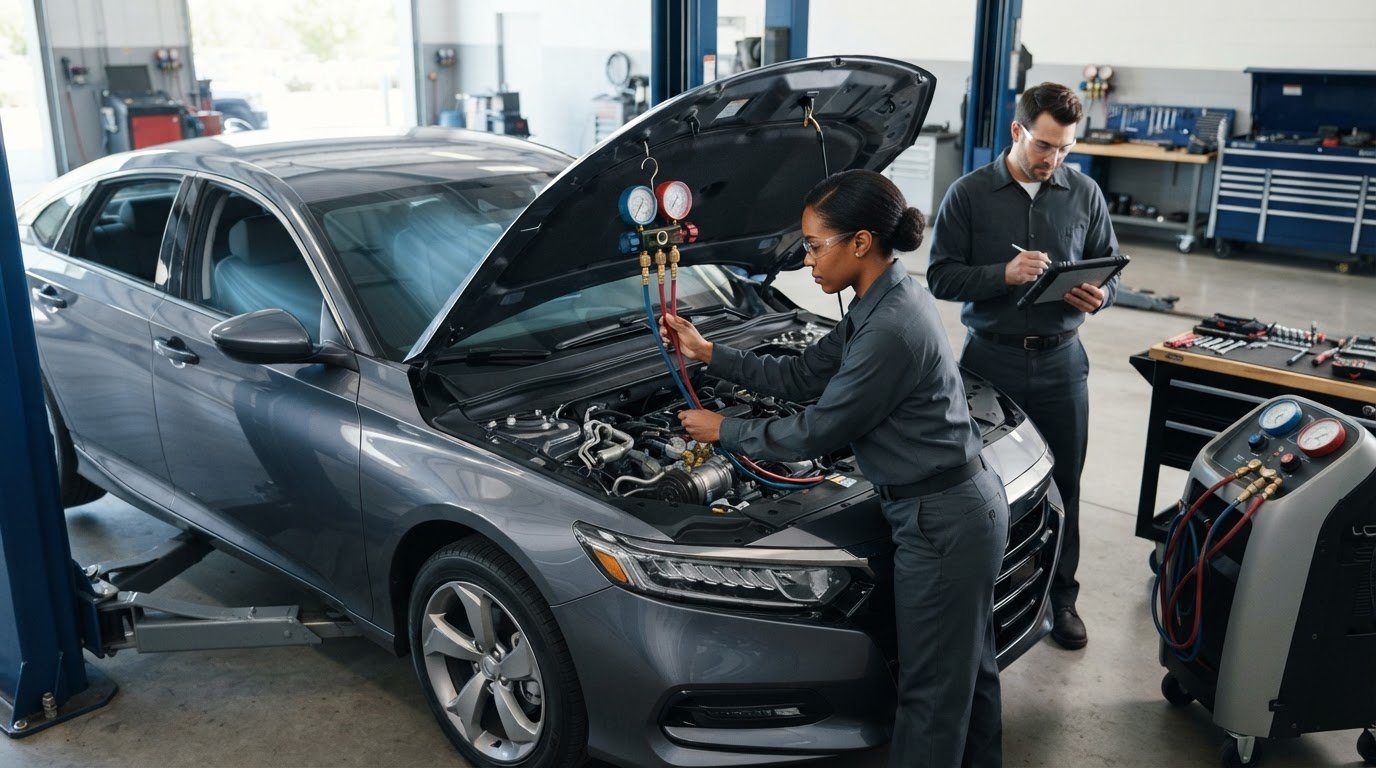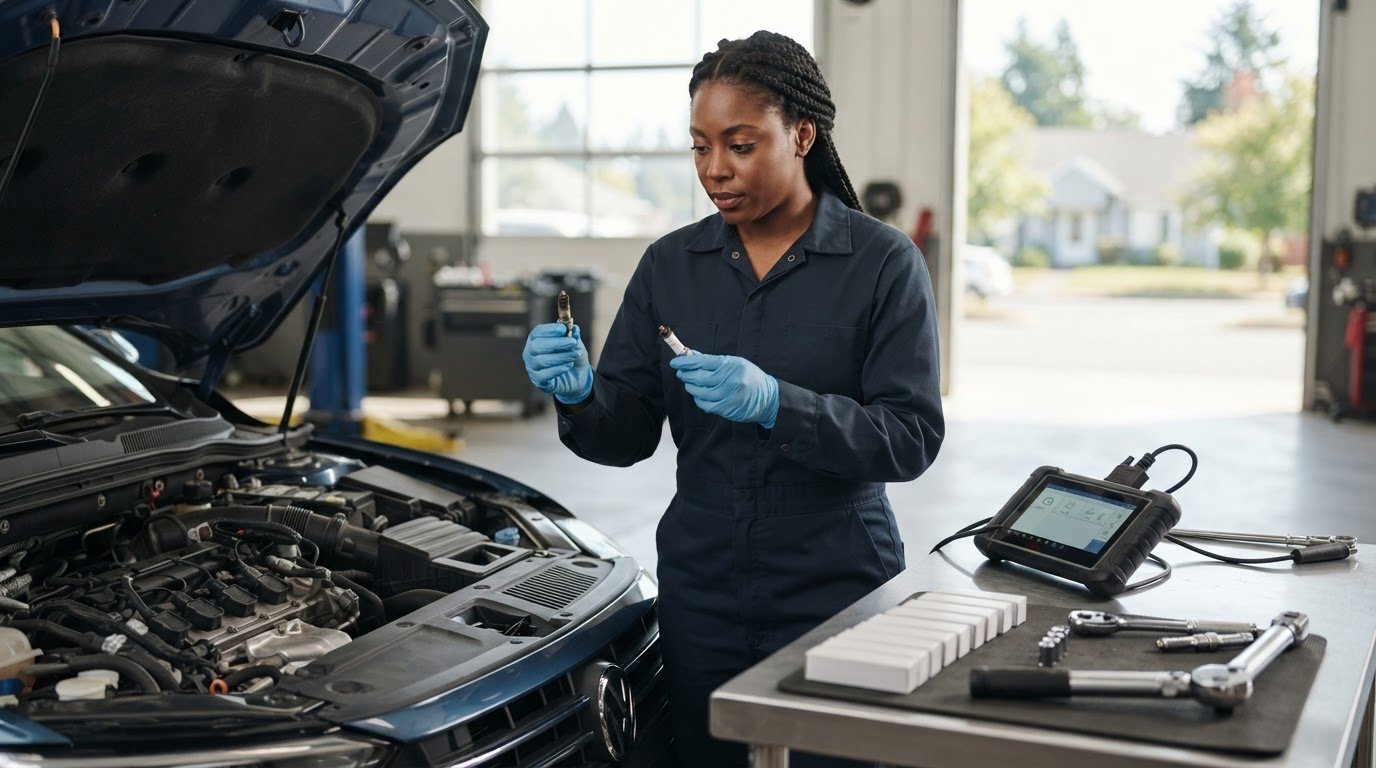
Brake rotors don’t need replacement just because a certain number of miles has passed. The answer to when to replace brake rotors comes from their measured condition, not guesswork. A pulsing brake pedal, steering wheel vibration, squealing or grinding, or visible grooves are reasons to arrange an inspection, but symptoms alone don’t prove the rotors are worn out.
It’s reasonable to want a clear answer before replacing brake parts. Waiting too long can affect braking, while replacing rotors without checking their condition may be unnecessary. The right decision connects what you notice behind the wheel with the rotor’s thickness and surface condition.
This guide explains which symptoms deserve attention, how a technician compares rotor thickness with the vehicle’s minimum limit, and when resurfacing may not be suitable. It also covers what a thorough brake inspection should include. At On Top Diesel & Automotive, ASE-certified technicians use brake diagnostics to identify whether rotor wear or another brake issue is behind the symptoms and explain the findings.
Key Takeaways
- Learn when to replace brake rotors by checking their condition and vehicle-specific limits, not a universal mileage interval.
- Understand how technicians measure rotor thickness and compare it with the manufacturer’s minimum specification.
- See when resurfacing may be suitable and why a rotor must remain within its specified limits to be reused.
- Know what symptoms to note and when to limit driving and arrange a brake inspection.
- Find out how On Top Diesel & Automotive’s ASE-certified technicians assess rotor concerns and related brake components.
When to Replace Brake Rotors: Symptoms That Deserve an Inspection
There’s no universal mileage interval for replacing brake rotors. The decision depends on the rotor’s condition and whether it meets the vehicle manufacturer’s specifications. If you’re wondering when to replace brake rotors , treat changes in braking as a reason to have the system inspected, not as a diagnosis. In a disc brake system, the pads press against the rotor to slow the wheel, so wear or damage to either part can affect braking.
Symptoms are a reason to inspect the brakes. Measurements and the rotor’s condition help determine whether it needs replacement. Pay attention to:
- Pulsation while braking: A pulsing pedal or steering wheel can point to a rotor concern, but it doesn’t automatically mean the rotor is warped or needs replacement.
- Scraping or grinding: These sounds may signal worn pads or contact between brake parts. Arrange an assessment promptly instead of trying to diagnose the cause by sound alone.
- Severe corrosion or cracks: A light film of surface rust after a vehicle sits differs from deep, flaking corrosion. Cracks, deep damage, or heavy corrosion need professional evaluation.
- Reduced braking or a changing pedal: If the vehicle takes longer to stop, the pedal feels different, or braking becomes unreliable, don’t continue driving if it feels unsafe.
Which brake rotor symptoms should drivers notice?
Note when a symptom occurs and whether it changes. For example, record whether vibration appears during gentle braking or mainly at higher speeds, and whether scraping happens every time you apply the brakes. These details help a technician investigate. Surface rust after sitting may differ from serious corrosion, but don’t dismiss visible cracks or substantial damage.
Can a symptom alone confirm a bad rotor?
No. Worn pads, a sticking caliper, wheel components, or another brake fault can cause sounds or vibration similar to rotor symptoms. An inspection and diagnostic work help narrow down the cause before repairs are recommended. Describe what you hear or feel, when it happens, and whether it’s getting worse.
If braking feels unreliable or the vehicle can’t stop normally, find a safe place to stop and don’t keep driving it. For other new or recurring symptoms, a measured inspection is the sensible next step. On Top Diesel & Automotive’s ASE-certified technicians assess rotor condition and related brake components as part of brake repair, then explain what the findings indicate.
How Technicians Decide Whether Brake Rotors Need Replacement
A rotor’s measured thickness must meet its vehicle-specific service limit. This is the manufacturer’s minimum thickness for that rotor, not a universal number for every car or truck. The limit may be stamped or cast onto the rotor, often near the hub, or listed in vehicle service information. A rotor at or below its minimum limit needs replacement. It can’t safely be machined thinner and returned to service.
Thickness helps answer when to replace brake rotors , but it’s only one part of the inspection. Rotors help create the friction that slows a vehicle, as explained in this overview of how brake rotors work. Technicians also examine the surface and check for conditions that could affect braking or make the rotor unsuitable for reuse.
What does minimum brake rotor thickness mean?
Rotors can wear at different rates, including between the left and right sides of an axle. A technician uses a micrometer to measure thickness at appropriate points across the braking surface, avoiding the raised outer edge where wear may differ. Comparing those readings with the vehicle’s specification shows whether the rotor remains within its service limit and whether its thickness varies across the disc.
How are rotor thickness and runout checked?
Thickness and runout describe different conditions. A micrometer checks how much material remains and can help reveal uneven thickness. A dial indicator set against the rotor as it turns checks lateral movement, or runout. A rotor may have adequate thickness but still show excessive movement, so one reading can’t replace the other. Acceptable measurements depend on the vehicle’s specifications.
A complete inspection also considers what measurements alone can’t show. The technician checks the rotor face and edges for scoring, cracks, heat-related damage, or significant corrosion, and looks at the mounting surfaces and related brake hardware. Debris or a poor fit at the mounting surface can affect how a rotor sits, while hardware concerns may contribute to uneven operation. The findings are considered together to determine whether the rotor can remain in service, be resurfaced, or should be replaced.
On Top Diesel & Automotive’s ASE-certified technicians investigate brake concerns and explain how measurements and visible condition guide a repair recommendation. If you’ve noticed a change in braking, discuss your brake symptoms as part of a measured inspection.
Brake Rotor Resurfacing or Replacement: How the Decision Differs
Resurfacing and replacement aren’t interchangeable fixes. Resurfacing removes a controlled layer of metal to create a suitable braking surface, while replacement installs a new rotor. The choice depends on the rotor’s condition, the vehicle’s repair guidance, and whether enough material will remain after machining. The minimum brake rotor thickness is a key reference, but it’s not the only condition a technician considers.
| Rotor condition | Specification check | Appropriate next step |
|---|---|---|
| Surface is serviceable, with no cracks or serious damage | Enough thickness will remain after resurfacing, within the vehicle’s requirements | Resurfacing may be considered if the repair procedure allows it |
| Rotor is worn, cracked, deeply corroded, or badly damaged | Already below the limit, or machining would take it below the limit | Replace the rotor |
| Condition or repair requirements are unclear | Measurements or inspection findings need review | Assess the rotor and follow vehicle-specific service guidance |
When can brake rotors be resurfaced?
Resurfacing may be appropriate when the rotor is otherwise serviceable and removing material will leave it safely above the manufacturer’s minimum thickness. The rotor also needs to meet the vehicle’s condition and repair requirements. A smooth surface alone doesn’t justify machining if the rotor is too thin, cracked, or damaged.
When is replacing rotors the safer repair?
Replacement is appropriate for a rotor that’s below specification, cracked, badly damaged, or deeply corroded. If machining would bring it below its service limit, resurfacing isn’t an option. The rotor needs to retain enough material to operate within the vehicle’s design limits.
Brake pads and rotors should be evaluated together. A new or resurfaced rotor needs to work with pads that can make proper contact, and pad wear or damage may affect the repair plan. Technicians commonly inspect both rotors on the same axle when deciding what work is appropriate. That doesn’t mean every vehicle requires automatic replacement of both. The condition of each rotor and the manufacturer’s repair procedure guide the decision.
For drivers weighing when to replace brake rotors , the practical question is whether each rotor is sound and will remain within specification after any proposed work. A clear inspection helps distinguish a rotor that can be serviced from one that should be replaced.
What to Do When You Suspect Your Brake Rotors Are Worn
A new scraping sound, vibration, or change in braking can be unsettling, but a few clear observations can make an inspection more useful. You don’t need to identify the cause yourself. Note what changed, avoid driving if the brakes feel unsafe, and have the system checked so the repair recommendation is based on the vehicle’s condition.
- Record what you notice. Describe the sound or feel and when it happens.
- Limit driving if braking is impaired. If the vehicle doesn’t stop normally or braking feels unreliable, don’t continue driving it.
- Arrange a brake inspection. Share your observations so the technician can investigate the concern.
- Review the findings. Understand what was measured, what damage was found, and how it compares with the vehicle’s service requirements.
What information should you share about brake symptoms?
Be specific about the sound: is it scraping, squealing, grinding, or intermittent? Note whether vibration is in the brake pedal, the steering wheel, or both, and whether it happens during gentle braking or at higher speeds. Tell the technician if the symptom is becoming more frequent or severe. Recent brake work and long periods when the vehicle was parked are useful context, but they don’t prove the rotor is the cause.
What should a rotor inspection explain?
A clear inspection summary connects the rotor’s measured condition to the vehicle’s requirements. It should identify the thickness measurement and applicable service limit in plain language, then describe visible damage such as cracks, deep scoring, or significant corrosion. If resurfacing is being considered, the explanation should clarify whether the rotor would remain within specification afterward.
The recommendation should also account for the brake pads and related components. Pad wear, caliper concerns, or other hardware conditions may affect the repair plan, so expect those findings to be explained alongside the rotor assessment. A clear recommendation links measured findings to the vehicle’s service specification.
These details help explain why a repair is recommended instead of relying on a symptom alone. If you’re unsure when to replace brake rotors , On Top Diesel & Automotive’s ASE-certified technicians use brake diagnostics and inspection findings to identify the concern and explain the next step. Arrange a brake inspection to have your symptoms and brake condition assessed.
Brake Rotor Inspection and Repair: How On Top Diesel & Automotive Helps
Rotor replacement should follow evidence, not a single noise or vibration. At On Top Diesel & Automotive, ASE-certified technicians use brake diagnostics and inspection findings to investigate symptoms, assess rotor condition, and consider related brake components. This helps distinguish a rotor concern from another possible cause before a repair is recommended.
How a thorough brake inspection supports a sound decision
A technician considers the rotor alongside the brake pads and related components. The inspection can include measuring rotor thickness against the vehicle-specific service limit and looking for visible wear or damage. The findings are considered together rather than treating a symptom as proof that the rotor has failed. If another brake component could be contributing to the concern, diagnostics help guide the investigation.
Expect a straightforward conversation: describe what you’ve noticed, review the inspection findings, and discuss the recommended repair. A clear explanation connects the rotor’s condition and measurements to the vehicle’s requirements. It also covers how pad wear or related brake-component concerns factor into the repair plan. The inspection determines the next step, so the recommendation should be based on the vehicle’s condition.
When to arrange professional brake service
Arrange an inspection if noise or vibration persists, gets worse, or comes with a change in normal braking. Grinding deserves prompt attention. If the brakes feel unreliable or your vehicle can’t stop normally, don’t continue driving it. Find a safe place to stop and arrange a safe way to have the vehicle assessed.
Knowing when to replace brake rotors starts with the symptoms, measurements, and rotor condition. On Top Diesel & Automotive provides brake repair for passenger vehicles and trucks, with ASE-certified technicians performing diagnostics and repairs using trusted parts. Share when the problem occurs and how it has changed to give the technician a useful starting point.
Learn about brake repair at On Top Diesel & Automotive and arrange an inspection to discuss your symptoms and findings.
Make Your Next Brake Decision With Confidence
Brake noise or pedal vibration is a reason to pay attention, but it doesn’t confirm rotor failure by itself. The best way to know when to replace brake rotors is to combine an inspection with thickness measurements, the vehicle’s service limit, and the rotor’s overall condition. Resurfacing is suitable only when the rotor remains serviceable and within specification.
If braking feels unreliable, don’t put off an assessment. On Top Diesel & Automotive provides brake repair and diagnostic services for passenger vehicles and trucks. ASE-certified technicians investigate symptoms and explain the inspection findings and recommended next steps.
Learn about brake repair at On Top Diesel & Automotive. A measured inspection can help you understand what your brakes need and decide what to do next.
Frequently Asked Questions
How do I know when my brake rotors need to be replaced?
Brake rotors need replacement when they’re below the vehicle’s minimum thickness or have damage that makes them unserviceable. Pulsation while braking, scraping or grinding noises, cracks, and deep corrosion are reasons to arrange an inspection, but symptoms alone don’t confirm rotor failure. A technician measures rotor thickness against the manufacturer’s specification and checks the surface and related brake parts before recommending a repair.
Can you drive with worn or damaged brake rotors?
It may be unsafe to keep driving if worn or damaged rotors affect braking. If the vehicle takes longer to stop, the brake pedal changes, grinding is present, or braking feels unreliable, pull over somewhere safe and don’t continue driving it. Less severe symptoms still deserve an inspection. A technician can assess the rotor and other brake components to help determine whether the vehicle can be driven safely.
How often should brake rotors be replaced?
There isn’t a universal mileage interval for replacing brake rotors. Rotor life depends on the vehicle, driving conditions, braking use, and the parts’ condition. Rather than relying on mileage alone, have rotors checked during brake service or if you notice a change, such as vibration or unusual noise. Replacement decisions are based on inspection findings and the vehicle’s specifications, including the rotor’s minimum thickness limit.
What happens if brake rotors are below minimum thickness?
A rotor at or below the manufacturer’s minimum thickness must be replaced. It has worn past the vehicle-specific service limit, and machining it thinner isn’t a safe way to restore it. Continued use can reduce braking performance and leave the rotor more vulnerable to heat damage. A technician can explain the measured thickness, the applicable limit, and whether related brake parts also need attention.
Can brake rotors be resurfaced instead of replaced?
Sometimes, but only if the rotor is otherwise serviceable and enough material will remain after machining to meet the manufacturer’s limit. Resurfacing removes a controlled layer of metal to restore the braking surface. It isn’t suitable for rotors that are cracked, badly damaged, deeply corroded, or too thin. Vehicle-specific service guidance and the rotor’s measured condition determine whether resurfacing is appropriate.
Do brake rotors need to be replaced in pairs?
Both rotors on the same axle should be inspected, but whether both need replacement depends on their condition and the vehicle’s repair requirements. One rotor may be more worn or damaged than the other. A technician can compare their measurements and condition, then explain the recommended work and how the pads and related parts factor in. Follow the vehicle-specific service procedure rather than assuming replacement is always required on both sides.
Can bad brake rotors cause vibration when braking?
Yes, rotor problems can cause a pulsing brake pedal or vibration through the steering wheel during braking. Uneven rotor thickness or lateral movement may contribute, but vibration doesn’t prove the rotor is bad. Worn pads, caliper concerns, wheel components, or other faults can produce similar symptoms. Note when the vibration happens and whether it’s getting worse, then arrange an inspection to identify the cause.