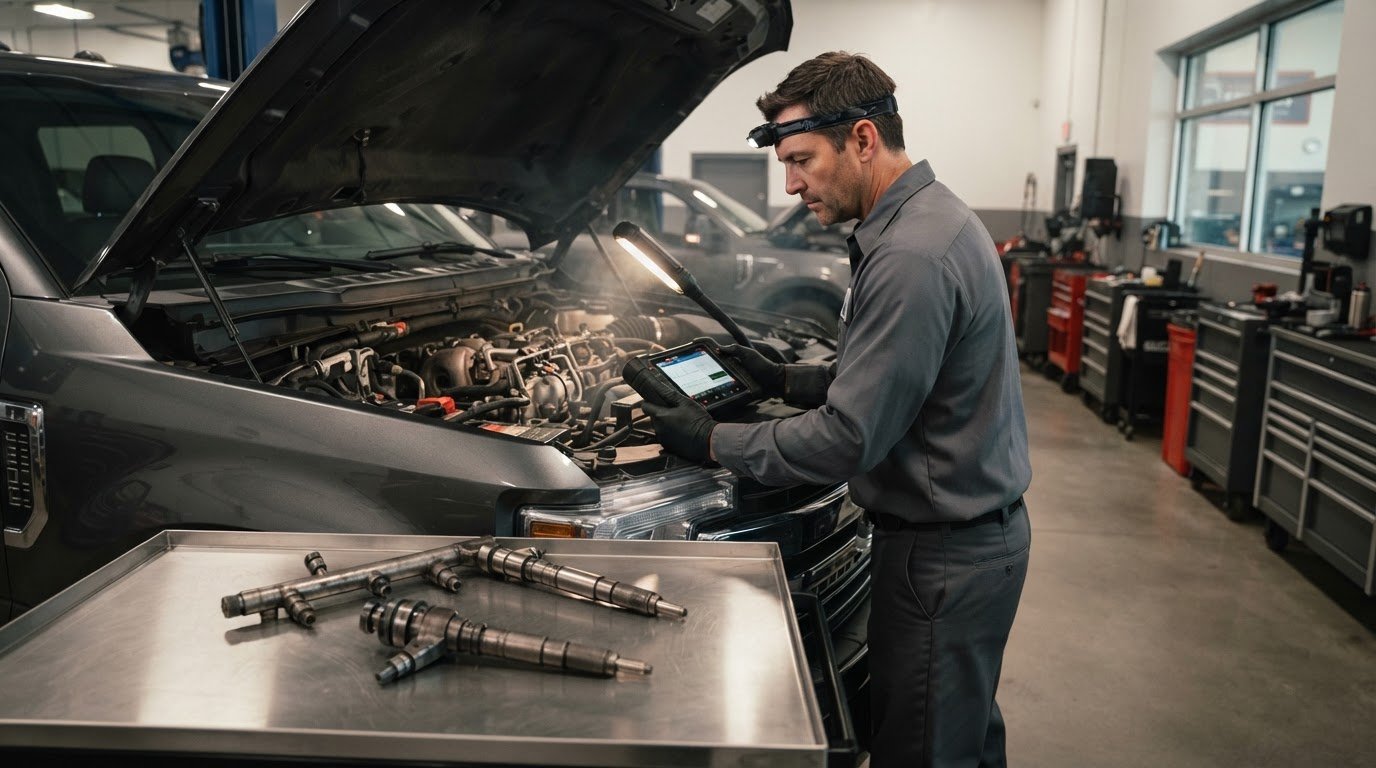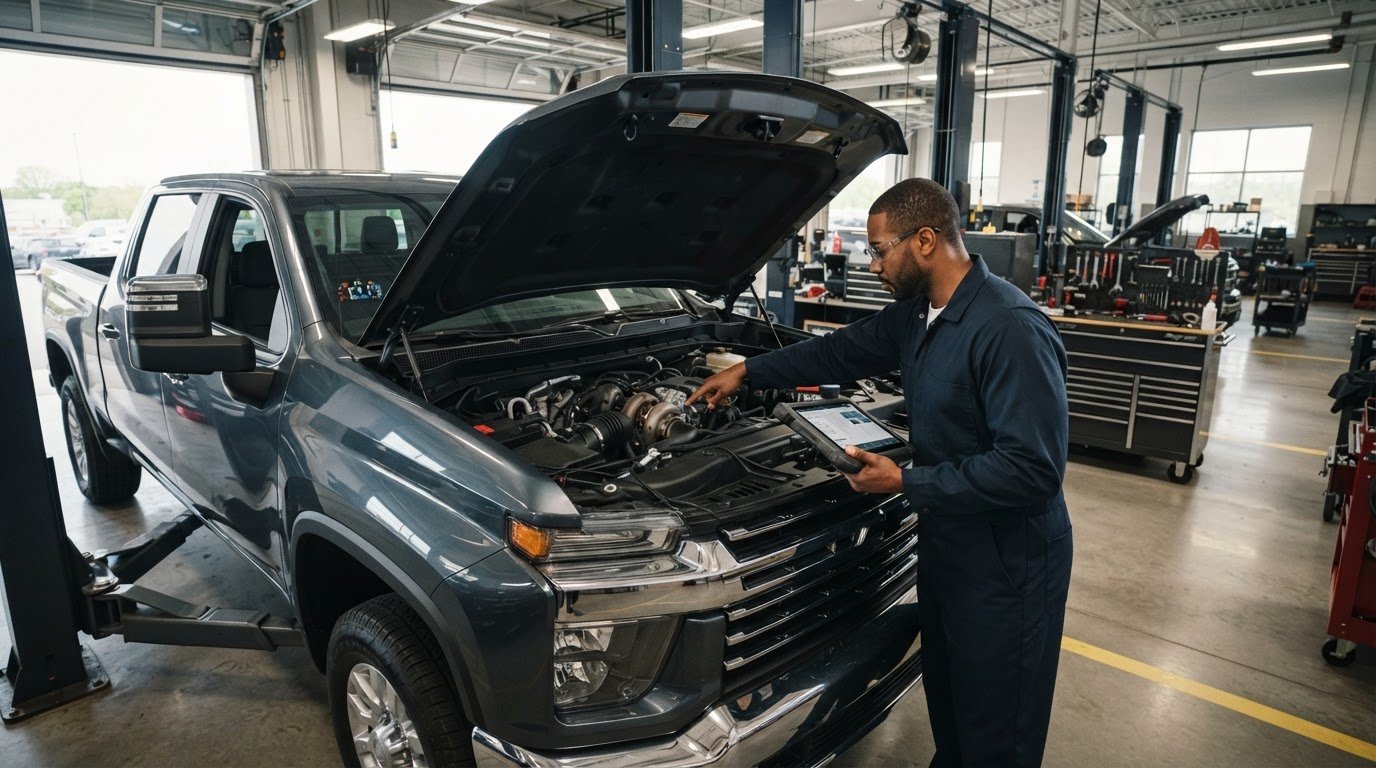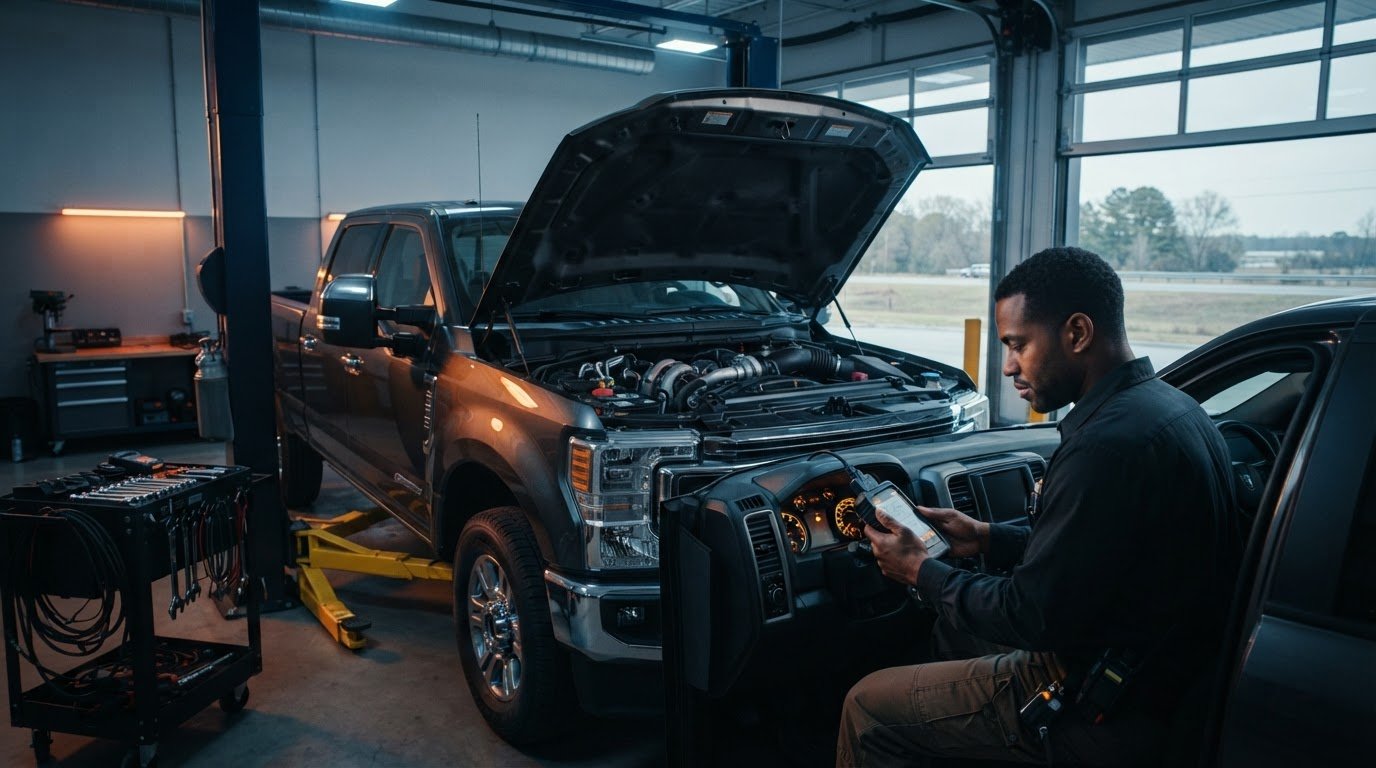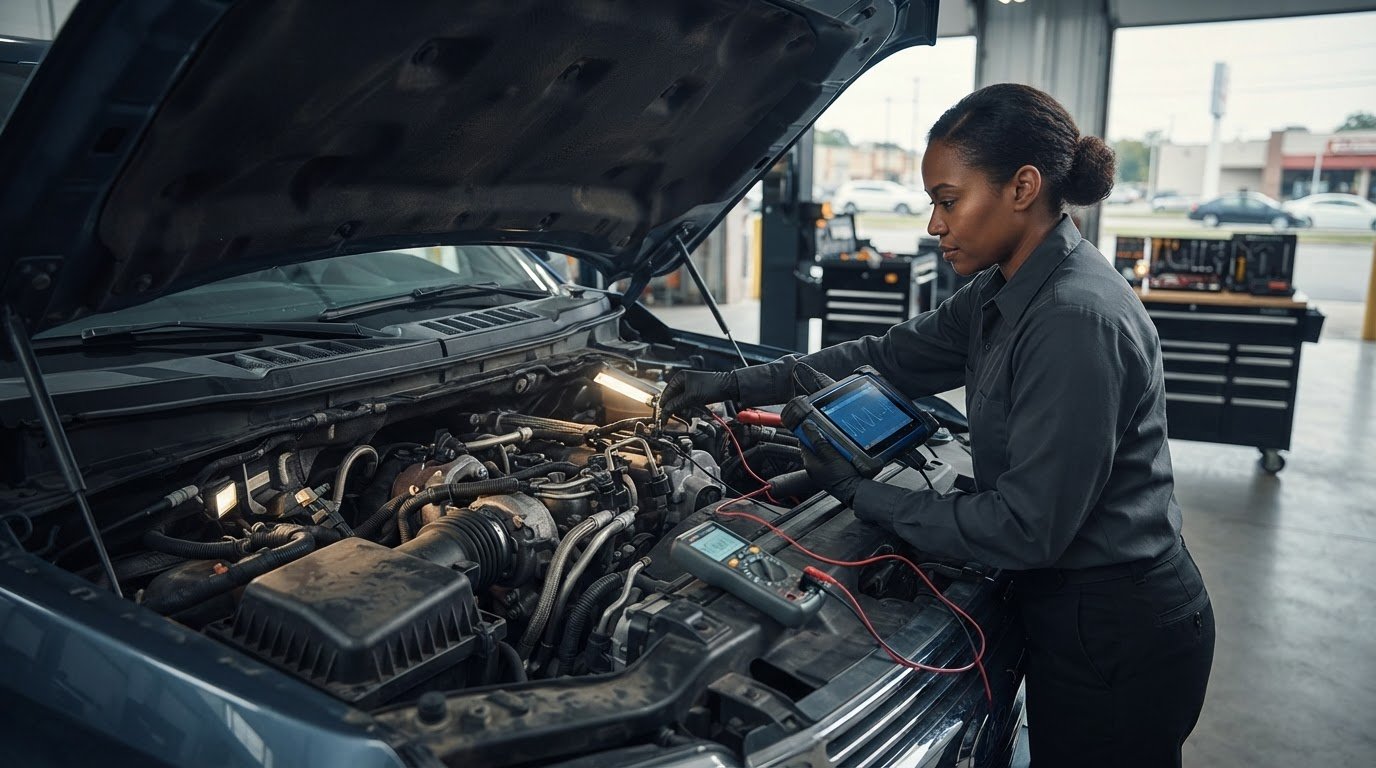
What if the battery isn’t the reason your vehicle struggles to start? A slow crank or a car that won’t start can point to a weak battery, but loose connections, corrosion, or a charging-system problem can cause similar trouble. That’s why battery testing and replacement should start with a careful check, not a guess.
It’s understandable to suspect the battery when starting becomes unreliable. A proper test can show whether it holds a charge and delivers the power your vehicle needs, but the result is only part of the picture. In this guide, you’ll learn what a battery test can and can’t reveal, when replacement makes sense, and which battery details need to match your vehicle. We’ll also explain how technicians check related starting and electrical components, so a new battery isn’t expected to solve a problem elsewhere. On Top Diesel & Automotive’s ASE-certified technicians handle battery and electrical repairs and diagnostics, focusing on finding the cause before recommending a repair.
Key Takeaways
- Slow cranking, clicking, dim lights, and repeated jump-starts are useful clues to share during a battery check.
- A voltage reading alone can’t tell the whole story. A complete assessment considers connections, battery condition, and charging performance.
- Use test results and your vehicle’s requirements to decide whether the battery is serviceable, needs more attention, or should be replaced.
- For battery testing and replacement, matching the battery to your vehicle and following its safety procedures helps support dependable operation.
- If starting trouble persists, checking related electrical components can help identify the repair that addresses its cause.
Battery Testing and Replacement: Which Warning Signs Call for a Test?
Starting trouble can point to a weak battery, but symptoms alone don’t confirm that the battery has failed. Slow cranking, clicking when you turn the key, dim lights, or repeated jump-starts are good reasons to have the starting system tested. Cold temperatures and driving patterns can affect battery performance, while loose or corroded connections and charging faults can cause similar signs.
A car battery supplies power to start the engine and support electrical systems, as outlined in this Automotive battery overview. It works alongside the starter and alternator, so identifying the source of trouble takes more than noticing one symptom. One warning sign can point to a failed battery, but testing helps distinguish battery trouble from another starting or electrical fault.
What do common battery warning signs look like?
With slow cranking, the engine turns over more slowly than usual before starting. Clicking may happen when there isn’t enough available power to turn the engine, but it can also be associated with connection or other starting-system problems. Dim headlights, flickering lights, or electrical equipment behaving inconsistently may also suggest a power issue, though they don’t identify its source on their own.
A single no-start event may have a one-time cause, such as leaving an electrical accessory on. A pattern is more useful: if the vehicle starts slowly on several occasions, needs repeated jump-starts, or struggles again soon after being driven, arrange a battery test. Note when the symptom happens and whether it changes with temperature or how often you drive. Those details help guide diagnosis.
Could the starter or alternator be causing the same symptoms?
Yes. The battery provides power, the starter uses that power to turn the engine, and the alternator helps supply electricity and recharge the battery while the engine runs. A weak connection can interrupt the flow between them. If the engine doesn’t turn over properly despite a charged battery, the starter may need attention. For more on those signs, read our starter replacement warning signs and diagnosis guide.
If the battery repeatedly loses charge after driving, or electrical issues continue while the engine is running, the charging system may be part of the problem. Battery testing and replacement should account for these related components, so a new battery isn’t installed without addressing an underlying fault. A full assessment can help distinguish a battery that needs service from a starter, alternator, or connection issue.
How Professional Battery Testing Checks More Than Voltage
A voltage reading gives a useful snapshot, but it doesn’t show by itself how well a battery performs under demand or whether the vehicle is charging it correctly. A careful test builds a fuller picture, moving from visible condition to battery performance and related electrical checks. The right procedure depends on the battery’s condition and the vehicle’s requirements.
A technician may work through these checks:
- Inspect the connections: Look for loose or corroded terminals, damaged cables, and visible battery damage that could interfere with power flow or safe testing.
- Assess the charge: Check the battery’s current state of charge. If it’s low, charging it before assessing its overall condition may be appropriate.
- Test battery condition: Use a load test or conductance tester, as suitable, to assess the battery’s ability to supply power.
- Evaluate charging performance: Check whether the charging system is replenishing the battery while the engine runs.
Safe procedures matter during inspection and testing. SAE International’s work on industry safety standards offers background on automotive battery safety standards.
What happens during a battery test?
The visual check comes first. A technician looks over the terminals and cables for corrosion or looseness, and checks for visible damage before connecting test equipment. The specific test depends on what the inspection finds and the vehicle’s requirements. A low charge may call for charging and retesting, while a battery that fails a condition test may need replacement. If the results don’t explain the problem, further diagnosis may be needed.
A battery load test checks whether the battery can deliver power when the vehicle places a demand on it. Conductance testing uses an electrical signal to help assess battery condition. Neither method replaces good judgment: results need to be interpreted in context, including charge level, battery type, and test conditions.
Why check the alternator, starter, and connections too?
A charging-system check helps show whether the alternator is replenishing the battery during operation. If it isn’t, even a serviceable battery can lose charge between drives. A starter that draws more power than expected can also strain the starting system, while a poor connection can restrict current and make starting unreliable.
There isn’t one reading that applies to every vehicle and test situation. Temperature, charge level, battery design, and the vehicle’s electrical requirements all affect how results should be interpreted. Battery testing and replacement decisions are more reliable when they include related component checks. On Top Diesel & Automotive’s ASE-certified technicians provide automotive and diesel diagnostics alongside battery and electrical repairs. If starting or charging concerns persist, battery and electrical diagnostics can help clarify the next step.
When Does Battery Testing Point to Replacement?
A test helps distinguish a battery that has reached the end of its service life from one that’s simply undercharged or affected by another fault. Age and symptoms are useful context, but neither should decide the repair by itself. A sound battery testing and replacement decision considers the test result, the vehicle’s requirements, repeat failures, and whether a charging or electrical problem may be behind the symptoms.
What test results suggest charging, retesting, or replacement?
A low charge doesn’t automatically mean the battery has failed. Depending on the findings, a technician may charge it and repeat the test before recommending replacement. A failed condition test supports replacement when considered alongside the vehicle’s specifications. If the battery keeps losing charge or readings are abnormal, charging-system and electrical checks can help identify why.
| Test result | What it may mean | Reasonable next step |
|---|---|---|
| Serviceable | The battery passes the condition test. | Keep it in service and investigate persistent symptoms elsewhere. |
| Low charge or unclear result | The battery may need charging or the test may need to be repeated under suitable conditions. | Charge and retest, then assess charging or electrical faults if needed. |
| Fails condition test | The battery can’t meet the test requirements. | Consider replacement with a battery that meets the vehicle’s specifications. |
Repeated failures matter. Replacement may be justified when test results show the battery can no longer perform as required, but installing a new one won’t necessarily fix symptoms caused by a charging fault, poor connection, or another electrical issue.
How do you choose the correct replacement battery?
Use the owner’s manual or vehicle documentation to match the battery group size, terminal layout, and required specifications. Cold-cranking amps (CCA) describe starting power under cold conditions; reserve capacity relates to how long a battery can supply power if the charging system isn’t providing it. They measure different capabilities, so one isn’t a substitute for the other.
Follow the vehicle’s specified battery technology, including AGM where required. Some vehicles also need a battery registration procedure or system reset after installation, and the steps vary by model. Proper handling matters during replacement too. The Ohio State University’s guidance on battery handling safety procedures covers precautions for working with automotive batteries. Checking fit, specifications, and vehicle-specific procedures helps make the repair a considered decision, not a guess.
What to Expect During Battery Replacement and Safety Checks
A careful replacement involves more than swapping one battery for another. Access, battery location, and electronic procedures vary by vehicle, so technicians follow the service information for that specific model rather than relying on one universal sequence. The ignition is switched off before work begins, and the battery is handled carefully to avoid damage or accidental contact between terminals and metal parts.
What are the main steps in a careful battery replacement?
Before removing the existing battery, the technician confirms that the replacement matches the vehicle’s required size, terminal layout, and specifications. They then follow the vehicle-specific procedure to disconnect and remove the old battery, install the replacement with correct polarity, reconnect the terminals, and secure the hold-down. A loose battery can move in its tray, while incorrect connections can damage electrical components.
Some vehicles need memory support during the change to preserve settings. Others require battery registration or a system reset after installation. These steps depend on the vehicle’s equipment, so an unfamiliar procedure or difficult-to-reach battery is a good reason to rely on trained service rather than improvise.
What should be checked after installation?
Once the battery is installed, the work isn’t finished until the connections and mounting are checked and the vehicle’s systems are reviewed. The technician can confirm that the vehicle starts as expected, electrical equipment operates properly, and any required reset or registration procedure has been completed. Starting and charging behavior should also be assessed, especially if those symptoms prompted the battery change. If trouble remains, further diagnosis may be needed rather than assuming the new battery solved the underlying issue.
Old batteries need careful handling and should go through applicable battery-recycling channels, not be left for regular household disposal. Vehicle-specific procedures matter here too: some batteries are harder to access, and modern electrical systems may need steps that aren’t obvious from a basic replacement guide.
Thoughtful battery testing and replacement includes confirming fit, following the correct safety steps, and checking how the vehicle performs afterward. On Top Diesel & Automotive’s ASE-certified technicians provide battery and electrical repairs alongside automotive and diesel diagnostics. Schedule battery service and diagnostics for an assessment and a clear next step.
Get a Battery Test and a Clear Next Step
When a vehicle’s battery drains overnight, guessing at the cause can lead to replacing a part that wasn’t responsible. A more reliable approach is to describe the symptoms, test the battery, assess related starting and charging components, then choose a repair based on the findings. That process helps distinguish a battery that needs charging or replacement from an electrical fault that may be draining it while the vehicle sits.
What information helps technicians diagnose the problem?
Small details can help point the diagnosis in the right direction. Note when the trouble began and how often it happens. Does the engine crank slowly every morning, or only after the vehicle has sat unused for several days? Mention recent jump-starts, warning lights, changes in starting behavior, and any recent battery work. If the problem followed a period of little or no driving, include that too.
Share what you’ve noticed without trying to diagnose the cause yourself. A clear account of the pattern gives technicians useful context alongside test results and inspection findings.
What happens after the test identifies the next step?
Findings may point to charging and retesting the battery, replacing a battery that fails its condition test, or continuing with electrical diagnosis. If the battery tests serviceable, the next checks may focus on the charging system, connections, or another source of overnight drain. The recommendation should follow the evidence and the vehicle’s requirements, rather than assuming a new battery will solve every starting problem.
At On Top Diesel & Automotive, ASE-certified technicians bring automotive and diesel diagnostic capability to battery and electrical concerns. An assessment can connect reported symptoms with test results and related system checks, helping establish a practical next step. That’s the value of battery testing and replacement as part of a broader diagnosis: the goal is to address the cause, not just the familiar symptom.
If your vehicle is struggling to start or the battery keeps losing charge, schedule battery and electrical service for testing and guidance on the next repair decision.
Take the Next Step Toward Reliable Starts
Starting trouble doesn’t always mean the battery has failed. A proper test looks beyond a single voltage reading and considers battery condition, connections, and charging performance. If replacement is needed, the battery must match your vehicle’s specifications, and installation may involve vehicle-specific safety checks or system procedures.
Thoughtful battery testing and replacement helps guide the repair toward the actual cause instead of treating a symptom alone. On Top Diesel & Automotive’s ASE-certified technicians provide automotive and diesel diagnostics and battery and electrical repairs, helping you understand the findings and next step.
If your vehicle is starting inconsistently or the battery keeps losing charge, schedule battery and electrical service. A clear diagnosis can help you move forward with greater confidence and get back to dependable starts.
Frequently Asked Questions
Is a battery test enough to tell whether my car battery needs replacement?
Testing is a strong decision aid, but results need context. Charge level, battery type, terminal connections, and vehicle requirements can all affect what a test means. A low reading may call for charging and retesting, while a failed condition test can support replacement. If the battery isn’t being replenished properly or the starter has a fault, those systems may need diagnosis too.
Can a bad alternator make a good battery seem dead?
Yes. A charging problem can leave a good battery undercharged and cause weak-start symptoms. A battery test can show its current condition, but it may not reveal why the charge is low. Technicians may also assess alternator output, connections, and related electrical conditions. Not every no-start points to an alternator problem, so testing the starting and charging system helps distinguish possible causes.
How long does battery testing and replacement take?
The time for battery testing and replacement varies with the vehicle, battery access, test results, and any required battery-management procedures. A straightforward battery test is different from diagnosis involving a starter, alternator, wiring, or repeated discharge. After assessing the vehicle, technicians can explain what work the findings call for and how vehicle-specific steps affect the expected service time.
What happens if I keep driving with a weak car battery?
A weak battery can make starting unreliable and may leave the vehicle unable to restart after you stop. Continued symptoms can also point to a charging or electrical fault, rather than the battery alone. Arrange a test instead of relying on repeated jump-starts. The results can help clarify whether the battery needs attention or another part of the starting and charging system needs diagnosis.
Can I replace my car battery myself?
Some vehicles allow a straightforward battery replacement, while others have difficult access, sensitive electronics, or battery registration requirements. The replacement must match the vehicle’s specifications, and correct polarity, secure mounting, and careful handling matter. Follow vehicle-specific instructions rather than assuming one procedure fits every car. If the steps are unfamiliar or unclear, professional service can help ensure the installation and required system procedures are handled properly.
What battery should I buy for my vehicle?
Choose a battery that matches your vehicle’s specified group size, terminal arrangement, technology, and performance requirements. Check the owner’s manual or vehicle-specific information instead of choosing by appearance alone. Some vehicles require AGM or another particular battery type, and using a different type may not meet the vehicle’s needs. Confirm the correct fit and specifications before installation.
Why does my car need a jump-start even after a new battery?
A new battery may not solve a problem caused by a charging fault, poor connections, a parasitic draw, or a starter issue. If the vehicle still needs repeated jump-starts, testing the battery and wider electrical system can help locate the cause. Share when the problem occurs, how often it happens, and any recent battery or electrical work so diagnosis starts with useful context.