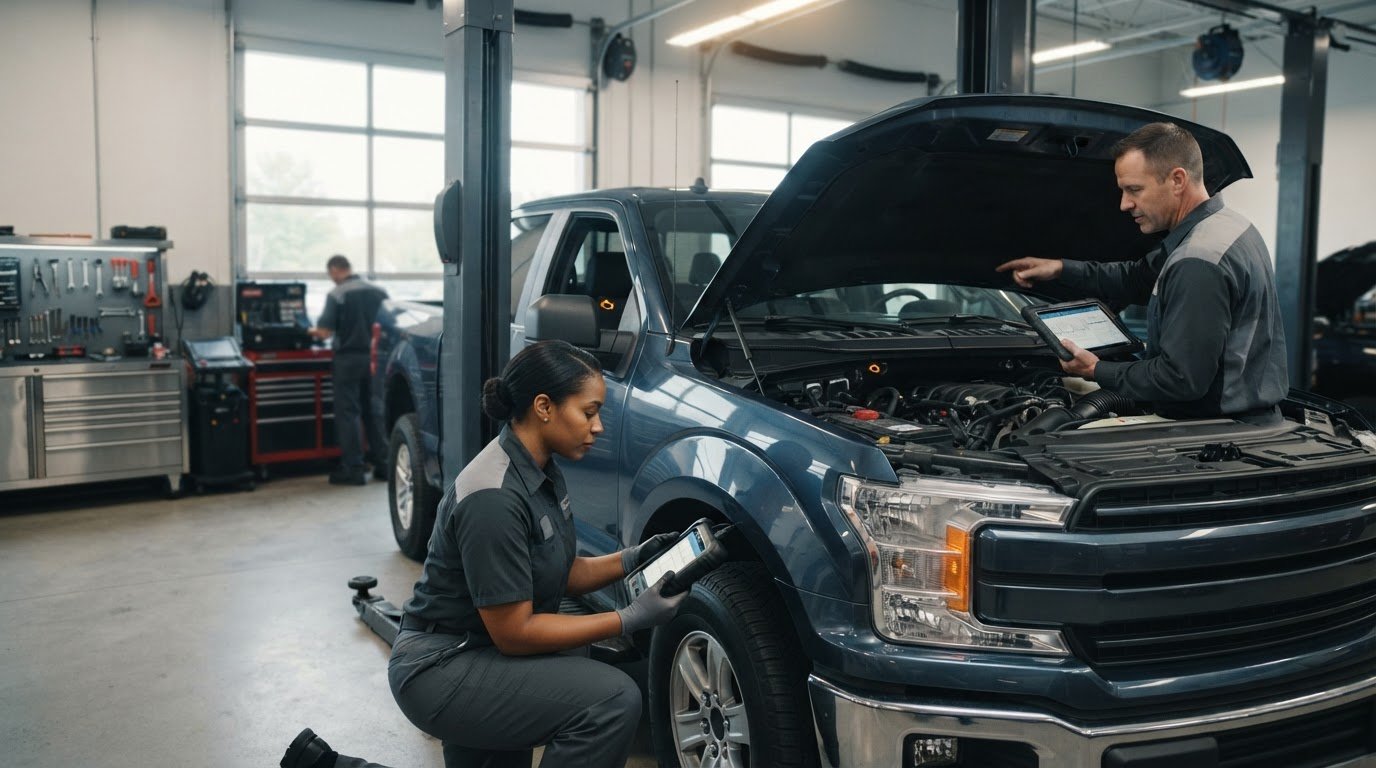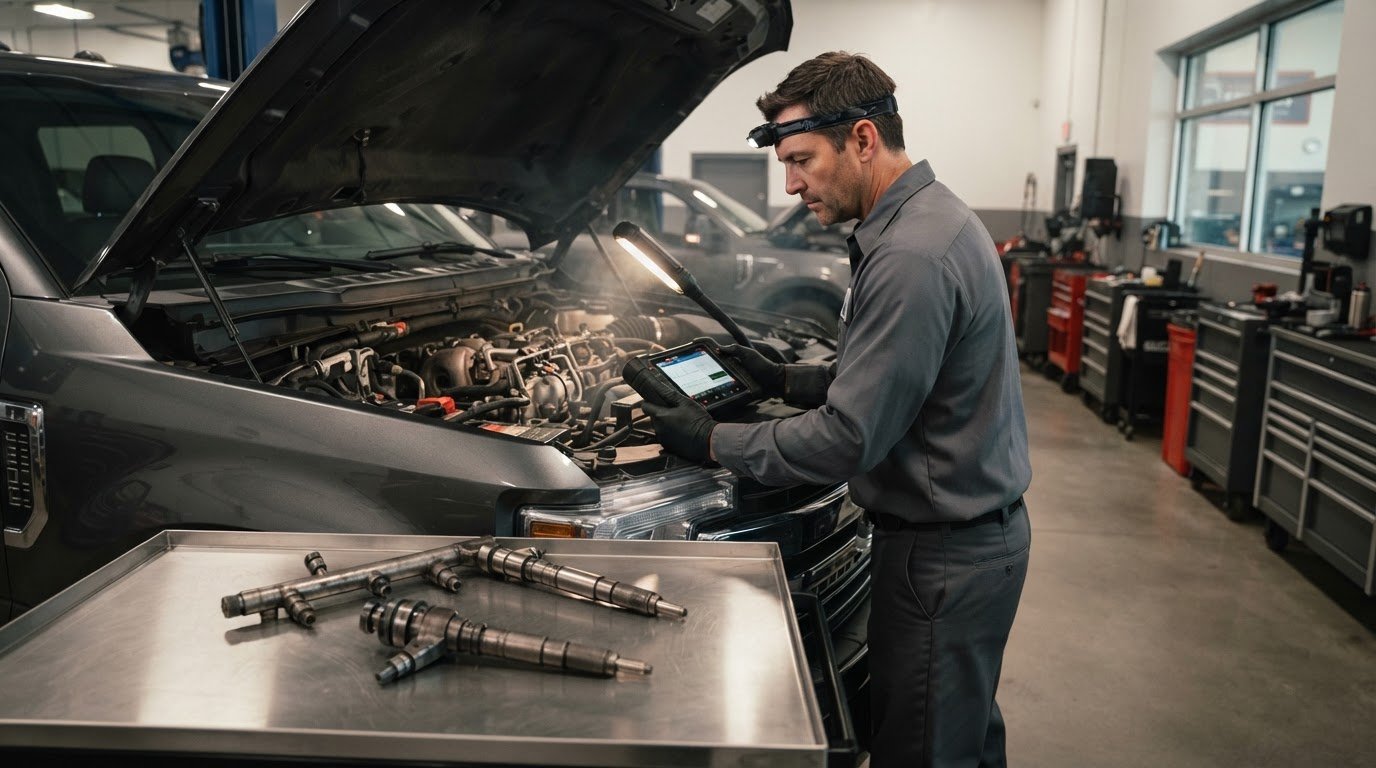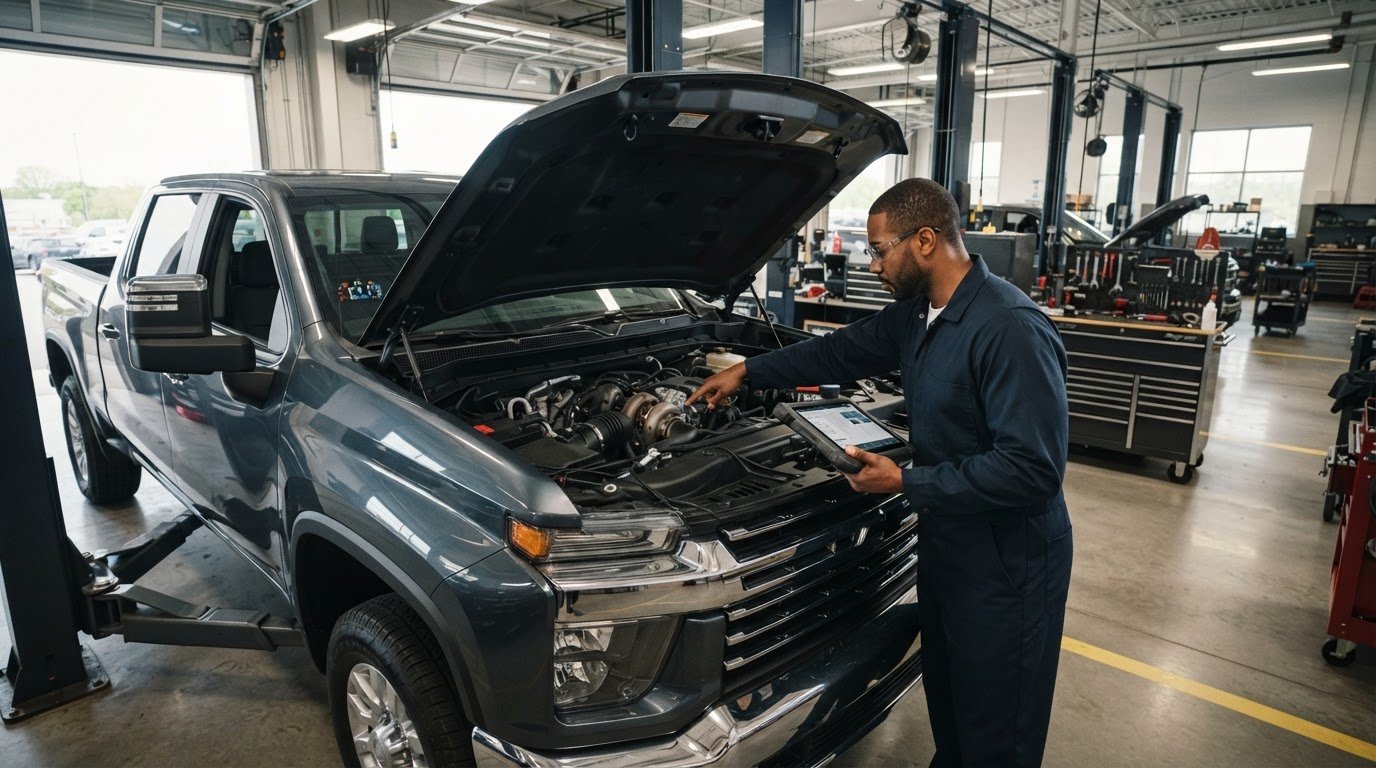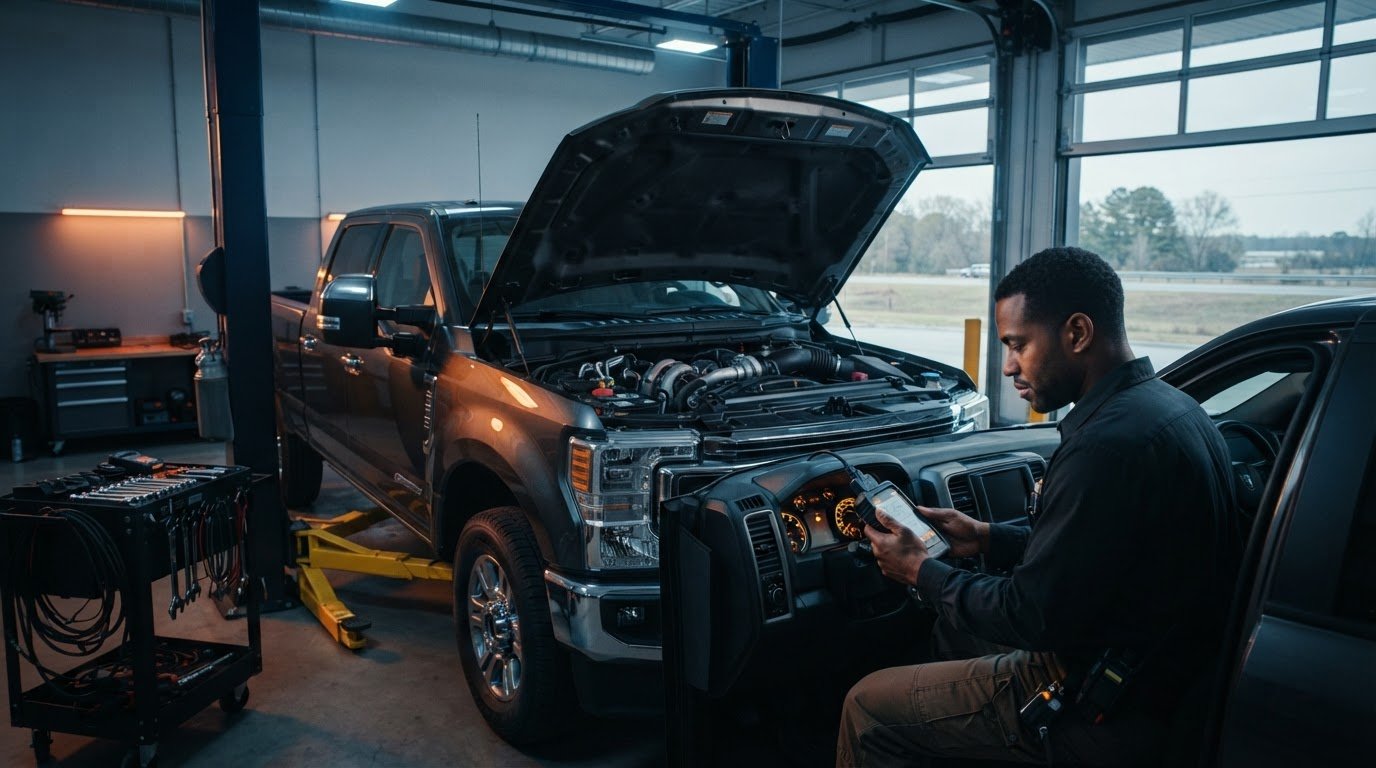
What if the sound that makes you consider starter replacement is actually coming from the battery or its connections? A click, grinding noise, or engine that won’t crank can make the starter seem like the obvious cause, especially when the dashboard lights still work. But these signs can overlap with battery, charging, or electrical problems, so symptoms alone can’t confirm what needs repair.
This guide covers common signs of starter trouble, other possible causes of starting problems, and why testing should come before replacing parts. You’ll also learn what details can help a technician assess the issue, including whether it happens every time, what sound you hear, and whether the engine cranks slowly or not at all. On Top Diesel & Automotive’s ASE-certified technicians can help assess starting concerns and explain appropriate repair options, so you can make your next decision with clearer information.
Key Takeaways
- Clicks, slow cranking, and intermittent starting can point to starter trouble, but none confirms the cause on its own.
- Learn how the battery, ignition circuit, solenoid, and starter work together, and why faults elsewhere can also prevent a start.
- See how a technician considers the starter alongside possible battery, cable, ignition-switch, and charging-system issues.
- Before arranging diagnosis, note when the problem occurs, any warning lights, recent battery work, and how often it happens.
- Understand why starter replacement should follow testing, with the repair recommendation based on the confirmed cause.
Starter Replacement Warning Signs: What Starting Problems Can Tell You
Starting trouble can be unsettling, but a symptom is a clue, not a confirmed diagnosis. A single click, slow cranking, or an engine that starts only sometimes may point to the starter system. Other faults can produce similar signs, so don’t decide on starter replacement based on one sound or one difficult start.
The starter motor turns the engine so it can begin running under its own power. It works with other parts of the starting system, which means trouble anywhere along the way may affect what happens when you turn the key or press the start button. This engine starter overview explains the starter’s role in getting an internal combustion engine going.
Pay attention to what the vehicle does. The engine may not crank even though the dashboard lights and accessories still work. Those lights can operate while the starting system has a problem, so they don’t prove the starter is healthy. Record the sound, whether the engine turns, and what happens after each attempt. These observations give a technician a clearer starting point for inspection.
What does a failing starter sound and feel like?
You might hear one click, repeated clicks, grinding, or nothing at all when trying to start the vehicle. Slow cranking or an intermittent no-start can also be a warning sign. None of these sounds identifies the faulty part by itself. Note whether the problem happens after a drive, after the vehicle has been parked, or under particular conditions, and whether it repeats. A clear description is more useful than guessing at the cause.
Intermittent problems can be especially confusing. The vehicle may start normally one time, then refuse to crank later. Keep track of when it happens and what you observe, even if the symptom disappears. That pattern can help a professional assess the starting and electrical system.
When do starter symptoms need prompt attention?
Stop repeated starting attempts if you notice smoke, a burning smell, or unusual heat. Continuing to try may add risk without resolving the problem. If the vehicle repeatedly won’t start, arrange professional help rather than relying on repeated attempts or treating a particular sound as proof of a failed starter.
Inspection and testing are needed to confirm the fault and determine whether starter replacement is appropriate. ASE-certified technicians at On Top Diesel & Automotive can help assess starting concerns and explain suitable repair options. Until the cause is clear, describe what happened and avoid assuming the starter is the only possibility.
How the Starter System Works and Why Symptoms Can Be Misleading
The starter is one part of a system that has to work together. The battery supplies electrical power, the ignition circuit carries the start request, and the solenoid helps connect power to the starter motor. The starter then turns the engine so it can begin running. A fault in any part of this chain may affect what happens when you try to start the vehicle.
A no-start symptom alone can’t confirm starter failure because several parts must work together to crank and start the engine. It also helps to distinguish between two situations: the engine may not crank at all, or it may crank but fail to start running. The first points to a problem in the starting process or its electrical supply. The second means the engine is turning, but another issue may be preventing it from starting. Neither situation confirms the need for starter replacement on its own.
What happens when you turn the key or press the start button?
When you turn the key or press the button, the vehicle’s starting circuit sends a signal to engage the starter. The solenoid acts as a switch, helping direct battery power to the starter motor. Once engaged, the motor turns the engine. The exact setup varies by vehicle, so check the owner’s manual for guidance on your vehicle’s starting system or warning indicators.
Why can a weak battery or poor connection look like starter failure?
The starter needs enough electrical power to turn the engine. A weak battery may lead to slow cranking, clicking, or no response. Loose or corroded battery connections can also interrupt the flow of power and create similar symptoms. Working headlights or accessories don’t provide a definitive battery test, so don’t use them alone to rule out a battery or connection problem.
Charging-system faults may also leave the battery without enough power, while an issue in the ignition circuit can prevent the start request from reaching the starter as intended. These are possibilities, not conclusions. A proper assessment checks the relevant parts of the system before recommending a repair. For a general overview of modern vehicle diagnostics, see the Universal Technical Institute’s explanation of diagnostic technology.
If starting trouble continues, professional diagnostics can help narrow down whether the concern involves the starter, battery, or electrical connections. Automotive diagnostics and battery and electrical repair can be a practical next step for getting the system assessed.
Starter Replacement or Another Fault? How a Technician Narrows It Down
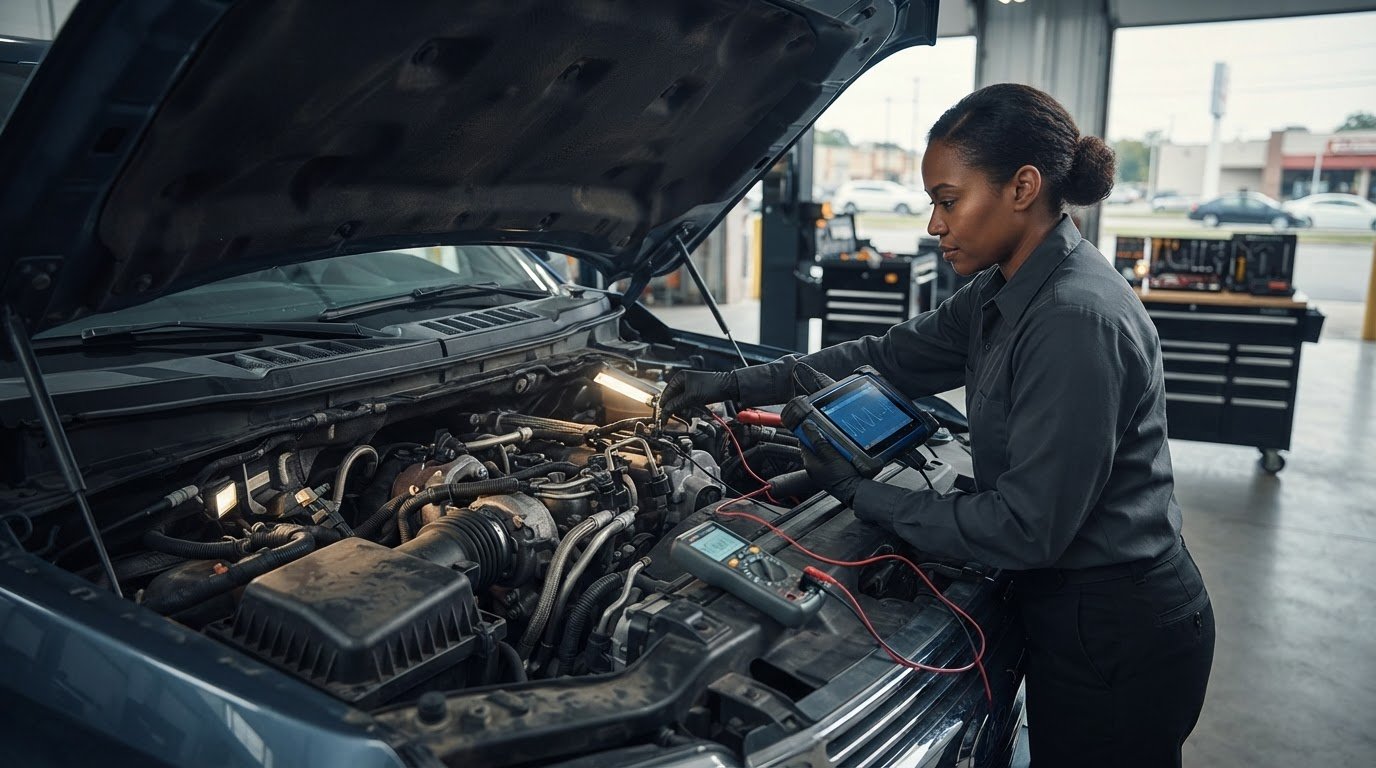
Starting symptoms can point in more than one direction. A technician considers how the engine responds, then tests the battery and inspects its connections before deciding whether the starter may be at fault. This helps distinguish a possible starter problem from other issues without replacing parts based on a sound alone.
Symptom: Repeated rapid clicking. Possible causes: Low battery power, a poor connection, or starter-related trouble.
Symptom: One click with no cranking. Possible causes: A battery or cable issue, or a problem involving the starter or its circuit.
Symptom: Slow cranking. Possible causes: A weak battery, a connection problem, or starter trouble.
Symptom: The battery loses charge over time. Possible causes: A charging-system concern, including a possible alternator fault, or another electrical issue.
Symptom: No response when you try to start the vehicle. Possible causes: An ignition-switch or circuit issue, a poor connection, a discharged battery, or a starter-related fault.
Does clicking mean you need starter replacement?
No. Clicking can accompany low battery power, poor connections, or starter-related trouble. Repeated rapid clicks and a single click may offer different clues, but neither sound confirms a specific failure. Testing the starting circuit is more dependable than guessing from noise. A technician can check the battery and connections, then assess whether the starter is receiving the power and signal it needs.
How can battery and alternator problems differ from starter trouble?
A starter concern affects cranking when you try to start the engine. A charging-system fault may affect how well the battery stays charged over time, which can later lead to starting trouble. Battery testing and an electrical inspection help distinguish these possibilities. For more on charging-system questions, read this alternator replacement and repair-shop guide.
If testing confirms a starter fault, the repair process should follow the vehicle’s requirements. DENSO’s starter removal and installation guide offers general reference information, though it doesn’t replace vehicle-specific diagnosis. For help sorting through starting or electrical concerns, consider automotive diagnostics and battery and electrical repair.
What to Do Before Starter Diagnosis or Replacement
A little preparation can make a starting problem easier to assess. Before deciding whether starter replacement is needed, follow this simple sequence:
- Record what happens. Note the sound, whether the engine cranks, and how often the problem occurs.
- Check the owner’s manual. Look for vehicle-specific guidance on warning lights or starting procedures, and avoid steps you’re unsure about.
- Arrange a diagnosis if the trouble persists. Testing can help identify the cause before parts are replaced.
Include the conditions around each incident. Note dashboard warning lights, recent battery work, whether the problem appears in particular temperatures, and whether it happens after the vehicle has been parked or driven. Repeated attempts to start the engine may drain the battery and make the original problem harder to assess. Avoid probing electrical parts or disconnecting components unless you have the right expertise and vehicle-specific instructions.
What information should you give the repair shop?
Describe what you hear and observe: a click, silence, slow cranking, or an engine that turns but doesn’t start. Explain whether it happens every time or only intermittently. Share any recent battery replacement, jump-start, or electrical repair, along with warning lights or other changes in how the vehicle behaves. These details help guide a professional assessment, but they don’t replace testing.
Is it safe to keep driving or trying to start the vehicle?
A vehicle that starts unreliably isn’t dependable transportation, since it may not restart after you stop. If it won’t start, or you’re concerned it could leave you stranded, arrange an appropriate way to have it assessed. Stop trying if you notice smoke, a burning odor, or signs of overheating. Don’t continue cranking in the hope that the problem will clear.
If the vehicle can’t be moved safely, consider arranging towing to a repair facility. On Top Diesel & Automotive provides diagnostics and battery and electrical repair, and its ASE-certified technicians can help assess starting concerns and explain appropriate repair options. Arrange a diagnostic assessment to discuss persistent starting trouble.
What to Expect During Professional Starter Replacement
A repair visit should begin with diagnosis, not an assumption that the starter has failed. A technician can assess the starting concern, check related parts, and explain what the testing indicates. If the starter is confirmed as faulty, the repair recommendation can outline the next step. Ask what work the shop currently performs, since starter replacement availability should be confirmed before you arrange service.
The process may include:
- Checking the battery and its connections.
- Inspecting relevant starting-system components and identifying the cause of the problem.
- Explaining the findings and recommended repair before proceeding.
- Replacing the starter if testing confirms it is needed, then checking that the vehicle starts properly.
What may a technician check before replacing the starter?
The technician may test battery condition, inspect for loose or corroded connections, and assess other parts of the starting circuit. Access and procedures vary by vehicle make and model, so the steps and time required can’t be assumed in advance. For general background on the work involved, DENSO provides a starter removal and installation guide. Vehicle-specific diagnosis still comes first.
How do you know the repair addressed the problem?
After the confirmed fault is repaired, the technician can check that the vehicle starts consistently. Before you leave, ask what was tested, which component was found faulty, and what operation checks were completed. Clear answers help you understand why the repair was recommended and what to watch for afterward. If the starting issue remains, tell the shop rather than assuming another part needs replacement.
On Top Diesel & Automotive’s ASE-certified technicians can help assess starting concerns and explain appropriate repair options. Contact On Top Diesel & Automotive to ask about diagnosis and confirm whether the shop currently handles the repair your vehicle may need.
Take the Next Step With Clearer Information
Clicks, slow cranking, and intermittent starting can be clues, but they don’t confirm that the starter has failed. Battery condition, connections, and other parts of the starting or charging system can cause similar trouble. Testing helps identify the cause before starter replacement is recommended.
Keep track of when the problem happens, what you hear, and whether the engine cranks. Share any warning lights or recent battery or electrical work when you arrange an assessment. These details help a technician understand what you’ve noticed and explain the next steps.
On Top Diesel & Automotive offers automotive and diesel diagnostics, along with battery and electrical repair. Its ASE-certified technicians can assess starting concerns and discuss appropriate repair options. Ask about the current scope of service for your vehicle, including whether starter replacement is available.
Contact On Top Diesel & Automotive to discuss a starting problem. A careful diagnosis can give you a clearer path forward and help you make your next repair decision with confidence.
Frequently Asked Questions
Can a clicking sound mean I need starter replacement?
A clicking sound can point to a starting-system problem, but it doesn’t prove the starter has failed. Low battery power, loose or corroded connections, and starter-related faults can cause similar symptoms. Note whether the click is single or repeated, and when it occurs. A technician can test the battery and starting circuit before recommending starter replacement. That testing helps avoid changing a part that isn’t responsible.
How do I know if the starter or battery is the problem?
Slow cranking, clicking, or no response can come from a weak battery or a starter fault, among other causes. Working lights don’t conclusively rule out a battery problem. Battery testing, connection inspection, and checks of the starting circuit can help narrow down what’s wrong. When arranging diagnosis, describe the exact symptoms and mention any recent battery work, jump-starts, or electrical repairs. Those details give the technician useful context.
Can a car start with a bad starter?
Yes, a vehicle with an intermittent starter-related problem may start sometimes and later fail to crank. That pattern doesn’t confirm the starter is responsible, since battery power or electrical connections could also be involved. Record when the problem happens and whether it repeats, then arrange diagnosis if it continues. If the vehicle has become unpredictable to start, don’t rely on it as dependable transportation until the concern has been assessed.
What happens if you keep trying to start a car with a bad starter?
Repeated attempts may further drain the battery and make the original issue harder to assess. Stop trying if you notice smoke, a burning odor, unusual heat, or grinding, and seek professional advice. If the engine won’t crank reliably, arrange diagnosis instead of continuing repeated attempts or guessing at a replacement. Describe what happened and how often it occurs so the technician can consider the full starting-system picture.
How long does starter replacement take?
Starter replacement time depends on the vehicle, access to the starter, the confirmed cause, and whether additional repairs are needed. Some starters are easier to reach than others, and procedures vary by make and model. A general estimate may not fit your vehicle. Ask the repair shop for a vehicle-specific estimate after diagnosis. First, the technician should confirm that the starter, rather than another component, needs attention.
Does a new starter fix a no-start problem?
A new starter will address a no-start problem only if testing confirms the starter is the cause. Battery faults, poor connections, ignition-circuit issues, and other problems can also prevent a vehicle from starting. Careful diagnosis helps avoid replacing a part that isn’t responsible. Ask the technician what tests identified the fault and what checks will confirm the repair addressed the starting concern.
Is it safe to drive with a starter problem?
A starter problem can leave you unable to restart the vehicle after you stop, even if it starts now. If starting is inconsistent, arrange an inspection before relying on the vehicle for a trip. Stop trying to start it if you notice smoke, a burning odor, or unusual heat. If it won’t start or can’t be moved safely, arrange appropriate help rather than continuing to crank it.